Listeners:
Top listeners:
-
 play_arrow
Kapital FM 92.9 The Station that Rocks!


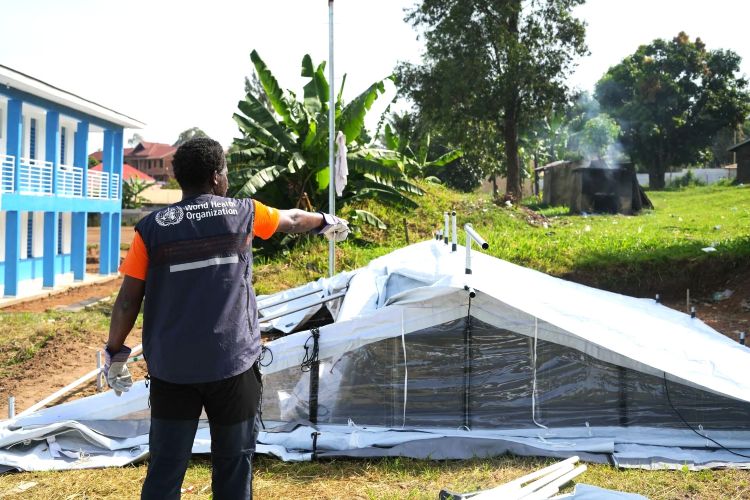
As of Sunday 1st of June 2-26, there were 210 confirmed cases of Ebola infection reported in the eastern Democratic Republic of the Congo (DRC) with 17 confirmed deaths. Nearly 350 suspected cases are under investigation and 16 health workers have contracted Ebola in DRC during this latest outbreak.
Since the declaration of the Ebola outbreak on 15 May, key response measures have included laboratory testing, disease surveillance, infection prevention and control, community engagement and resource mobilization.
Here are key facts you must know about the new Ebola outbreak
It is caused by the Bundibugyo strain of Ebola
1. The current outbreak is caused by Bundibugyo ebolavirus, a relatively rare Ebola virus first identified in Uganda in 2007. Unlike the more common Zaire strain, there is currently no licensed vaccine or specific approved treatment for Bundibugyo Ebola.
2. The outbreak began in the Democratic Republic of Congo (DRC)
The outbreak was officially declared on 15 May 2026 after laboratory confirmation of cases in northeastern DRC, particularly in Ituri Province. It later spread across the border into Uganda.
3. WHO declared it a global public health emergency
On 17 May 2026, the World Health Organization determined that the outbreak constituted a Public Health Emergency of International Concern (PHEIC) because of its cross-border spread and potential international impact.
4. Cases have been reported in both DRC and Uganda
As of early June 2026, DRC has reported hundreds of confirmed cases and many more suspected cases.
Uganda has confirmed cases linked to cross-border transmission and reported 15 confirmed cases, one death, and several recoveries.
5. Healthcare workers have been infected
According to available reports, multiple healthcare workers have contracted the disease while treating patients, highlighting the risks faced by frontline responders.
6. Ebola is not airborne
Ebola spreads through:
Direct contact with blood or bodily fluids of an infected person.
Contact with contaminated objects.
Contact with bodies during unsafe burial practices.
It does not spread through the air like COVID-19 or influenza.
7. Symptoms can resemble common illnesses at first
Early symptoms include:
Fever
Headache
Fatigue
Muscle pain
Sore throat
As the disease progresses, patients may develop vomiting, diarrhea, and in some cases bleeding. Symptoms can appear 2–21 days after exposure.
8. The outbreak is challenging to contain
Response efforts are complicated by:
Conflict and insecurity in affected areas.
Population movement across borders.
Limited laboratory capacity.
Community mistrust and misinformation.
9. Some patients are recovering
Despite concerns, several patients have recovered and been discharged from treatment centers, showing that early detection and supportive medical care can improve outcomes.
10. What does this mean for Nigeria?
Nigeria has not reported any confirmed case linked to this outbreak.
However, the Nigeria Centre for Disease Control and Prevention (NCDC) has advised states to strengthen preparedness, surveillance, screening, infection prevention, and rapid-response systems because of international travel and regional movement.


Post comments (0)