Listeners:
Top listeners:
-
 play_arrow
Kapital FM 92.9 The Station that Rocks!


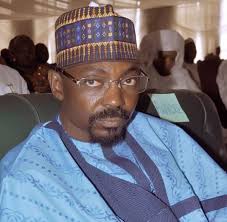
A Senior Advocate of Nigeria SAN, Alhaji Mohammed Ndarani has urged the Federal Government to come up with the necessary legal framework towards achieving a wholistic constitutional review in the interest of all citizens.
According to him, no constitution is entirely good or bad but the people who review and implement the provisions.
Ndarani stated this in a media briefing in Abuja.
“In this instance, we are talking about Nigeria as a country and the process must be drawn from the peculiarities based on the demography, ethnicity, the economic structure as well as many other variables that make up this huge, complex society called Nigeria.”
“The 1999 Nigerian constitution, which is basically what is in operation, has gone through five amendments.Let us not forget in a hurry that this constitution was put together under the military regime and many efforts to knock it into shape, recorded little success and
now that we have embarked on another journey of review and amendment, there’s need to draft a brand new constitution that would properly address the realities of today’s Nigeria.”
“A Committee reviewing 87 priority areas should work collectively to prioritize bills that cut across critical national concerns like the local government autonomy, state policing, judicial, electoral reform, fiscal federalism, gender inclusion and procedural governance as the developments of Nigeria depends on complete overhaul and comprehensive amendment of the 1999 constitution, which was only made as an annexure to a military decree.”
Ndarani explained that since 1999, successive amendment efforts have suffered severe setbacks, hence the need for the National Assembly to make provision for a proper referendum prior to amendments to those critical areas making it a people oriented constitution with much-needed legitimacy by bringing the laws closer to the people.
‘Considering that the Zonal public hearings are already underway, with plenary billed for October, 2025, the voice of the people should be heard to ensure a greater relevance and acceptability of the outcome.World over, constitutions are amended to respond to socio-economic, cultural, political changes, and the process must entail mass participation, transparency and credibility devoid of personal interests.
“In many instances amendments are seen as a means of protecting vested interests hence drafters should listen more to the people to ensure a participatory constitutional reform process that reflects the aspirations and yearnings of all Nigerians to address structural, fundamental and emerging issues within the Nigerian Federation;m.”
“These issues must include what kind of federation Nigeria should have, how to address insecurity and unrest. It should also consider whether to revert to the parliamentary system of government or whether regionalism would be more practical.It should also provide for how to collect and distribute tax, ensuring judicial autonomy, police reform, roles of traditional institutions, rulers, compulsory national youth service corps, and gender sensitive issues.”
The Legal Practitioner emphasized that sovereignty belongs to the people, hence their security and welfare therefore should be the primary purpose of the government as enshrined in Chapter II, Section 14 of the Nigerian Constitution explicitly stating that the people of Nigeria hold sovereignty, and the government’s powers and authority are derived from them.
“I also ask, why did the National Assembly remove the submissions calling for a removal of the immunity clause which will fight corruption at the highest places and they are refusing to allow debate on the removal been part of what the people want to be able to hold their leaders accountable as the removal will help them gather evidence and prosecute erring leaders”.
“I also align my humble self with the indigneship bill tabled by the Deputy Speaker of the House of Representatives, Hon. Benjamin Kalu, who proposed a bill to grant indigene status to individuals who have resided in a state for 10 years or married a native, which has ignited deep controversy across Nigeria.
“I see it as a progressive move for national unity Nigerian citizenship is primarily defined in Chapter 3 of the 1999 Constitution (as amended) outlines three ways to acquire citizenship as long as you meet certain requirement by law as the provision also stated that Nigeria is one indivisible nation. It is Nigeria first, before individuals.Ndarani added.
Garry Ochigbo, Edited By Grace Namiji

Post comments (0)