Listeners:
Top listeners:
-
 play_arrow
Kapital FM 92.9 The Station that Rocks!


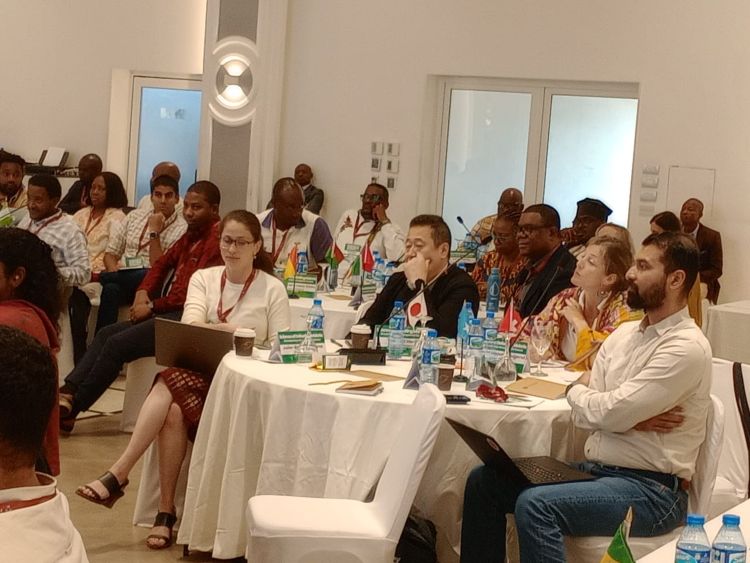
Health experts have emphasized the critical role of leadership, local manufacturing, epidemiological data, and community participation in accelerating efforts to defeat malaria across Africa.
Speaking during the Science of Defeating Malaria Leadership Course in Abuja, the Chief Executive Officer NASENI Trummic Nigeria Biotechnologies, Dr. Selim Hani, described the programme as a vital platform for building the knowledge, collaboration, and leadership required to eradicate malaria on the continent.
 According to him, while awareness of the need to eliminate malaria is widespread, the challenge lies in identifying effective strategies to achieve that goal.
“The course provides an opportunity for professionals, policymakers, and government officials to exchange expertise, share experiences, and develop practical recommendations that can lead to malaria elimination, It is not just about understanding why malaria must be defeated, but also learning how to do it,” he said.
Dr. Hani highlighted the importance of local production of diagnostic kits, noting that domestic manufacturing can significantly strengthen disease surveillance and outbreak response.
He explained that local production reduces dependence on imports, shortens delivery times, lowers costs, and enhances Africa’s healthcare sovereignty.
“Our factory has the capacity to produce up to 600 million rapid diagnostic tests annually. In the event of an outbreak, we can develop and distribute diagnostic kits within days rather than waiting months for imported supplies,” he stated.
Drawing lessons from the COVID-19 pandemic, Dr. Hani recalled the difficulties Nigeria faced in accessing diagnostic kits during the early stages of the outbreak, stressing that local manufacturing would ensure quicker access to quality-assured tests.
He also called for increased public awareness on the importance of testing before treatment, warning against the widespread practice of self-medicating for malaria without proper diagnosis.
“Many people take malaria drugs whenever they feel unwell, yet estimates suggest that about 70 percent of those taking the medication may not actually have malaria.”
 Testing first helps ensure appropriate treatment, prevents drug resistance, reduces unnecessary health risks, and makes better use of limited healthcare resources,” he added.
Also speaking, Professor of Clinical Epidemiology at the University of Health and Allied Sciences, Ghana, and a member of the core coordinating faculty of the course, Professor Evelyn Asante, underscored the value of epidemiological data in designing effective malaria interventions.
She explained that epidemiology helps health authorities understand who is affected by malaria, where transmission occurs, when infections happen, and the factors driving disease spread.
“Reliable data allows us to tailor interventions to specific locations. Areas with low transmission require different approaches from areas with high transmission. Without data, it is difficult to know which interventions will be most effective,” she said.
Professor Asante further stressed that malaria elimination efforts cannot succeed without active community involvement.
According to her, communities are best positioned to identify local challenges and practical solutions because they understand their environment and circumstances.
“The community is at the last mile of healthcare delivery. If we engage them properly, they can become active partners in malaria prevention and control. Communities can be trained to carry out activities such as environmental management and larviciding, which are essential in reducing mosquito breeding and transmission,” she noted.
The Chief Operating Officer at Codix Pharmaceutical, Mrs Mary Ogangwu agreed that defeating malaria will require sustained investments in leadership development, local health innovations, evidence-based decision-making, and community-driven interventions.
She expressed optimism that initiatives such as the Science of Defeating Malaria Leadership Course will help strengthen collaboration among stakeholders and accelerate progress towards a malaria-free Africa.


Post comments (0)