Listeners:
Top listeners:
-
 play_arrow
Kapital FM 92.9 The Station that Rocks!



Stakeholders in the Housing Cooperative Sector, have called for stronger collaboration, digital transformation, and cooperative-driven solutions to tackle Africa’s housing deficit.
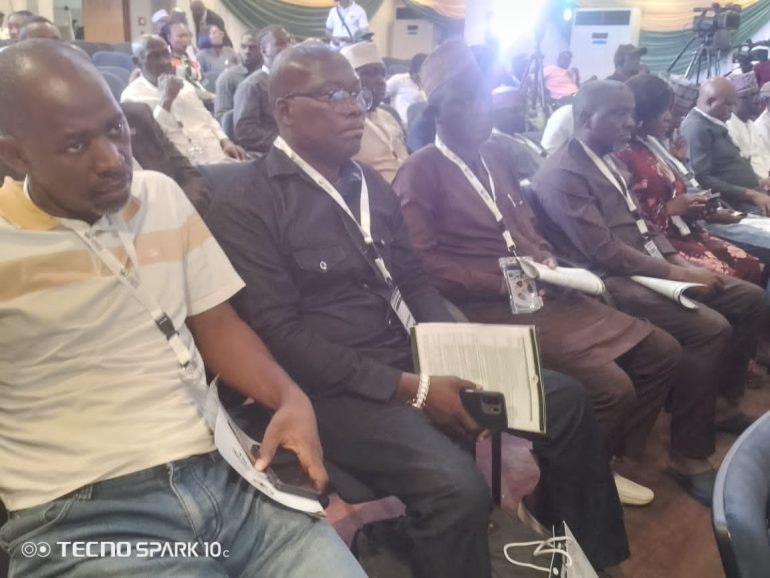
They made the call in Abuja at the 2026 Cooperative Housing Summit Africa, CHOSA, where stakeholders across the housing, finance, technology, and cooperative sectors gathered to discuss sustainable pathways to affordable housing delivery on the continent.
The two-day summit, themed “Catalysing Adequate Housing for All Through Cooperatives,” with the sub-theme “Leveraging Digital Finance for Housing,” attracted government officials, cooperative leaders, financiers, developers, FinTech firms, investors, and development partners from across Africa.
Speaking at the event, the Minister of State for Agriculture and Food Security, Senator Ali Sabi-Abdullahi said the future of cooperative housing development in Africa depends largely on digital transformation, transparency, accountability, and inclusive financing systems capable of reaching low- and medium-income earners.
The minister explained that the Federal government had proposed a cooperative housing framework that is government-enabled rather than government-funded, noting that it is built on cooperative ownership principles and strategic partnerships designed to ensure sustainability and long-term institutional stability.
According to him, the ownership structure allocates 65 percent controlling equity to cooperative societies through a cooperative holding arrangement, while 30 percent non-controlling equity would be shared among strategic investors, development finance institutions, individual cooperatives, and cooperators. He added that employees would hold the remaining five percent equity participation.
Senator Abdullahi further highlighted digital innovations expected to transform cooperative housing delivery, including digital savings systems, cooperative mortgage automation, smart identity management systems, blockchain-enabled transactions, mobile payment platforms, credit scoring mechanisms, digital registries, and technology-driven investment mobilisation.
He disclosed that the Federal Ministry of Agriculture and Food Security, through the National Cooperative Digital Architecture Platform, is promoting a framework that integrates digital identity management, financial intelligence, cooperative operations management, regulatory compliance, and rural digital access.
Among the innovations under the framework, the minister listed the Cooperative Verification Number (CVN), Cooperative Member Identification Number (COPID), smart cooperative registration systems, enterprise resource management platforms, financial reporting and audit systems, and integrated digital access channels for cooperators nationwide.
According to him, the reforms are expected to improve governance, strengthen transparency, enhance investor confidence, and unlock financing opportunities within the cooperative ecosystem, while also improving land administration, mortgage repayment systems, housing project monitoring, procurement transparency, and stakeholder accountability.
In a remark, the Convener of the Summit who is also the Chairman of the Cooperative Housing Association Africa, Dr. Yemi Adelakun described cooperative housing as a viable model for delivering affordable housing with scale through self-help and collaborative principles, especially for citizens excluded from the formal mortgage system.
He noted that cooperative housing offers benefits such as affordable housing finance, group savings, increased bargaining power for homebuyers, stronger social capital, and access to bulk discounts from developers and building materials manufacturers.
Dr. Adelakun said affordable housing challenges in Africa remain multidimensional, affecting both the supply and demand sides of the housing sector. He explained that developers often prioritise high-profit luxury housing projects, while low-income earners continue to face challenges including low income levels, limited mortgage access, and financial exclusion.
The CHOSA Africa Chairman advocated a transition from the traditional Public-Private Partnership model to a Public-Private-People Partnership framework, stressing that governments, cooperative institutions, mortgage providers, private developers, technology firms, development finance institutions, academics, and community groups must work together to achieve adequate housing for all Africans.
He added that the summit would also provide a platform for knowledge sharing, policy dialogue, investment mobilisation, and strategic partnerships ahead of the next CHOSA Africa summit scheduled to hold in Kenya.
Florence Adewale, Edited By Grace Namiji


Post comments (0)