Listeners:
Top listeners:
-
 play_arrow
Kapital FM 92.9 The Station that Rocks!


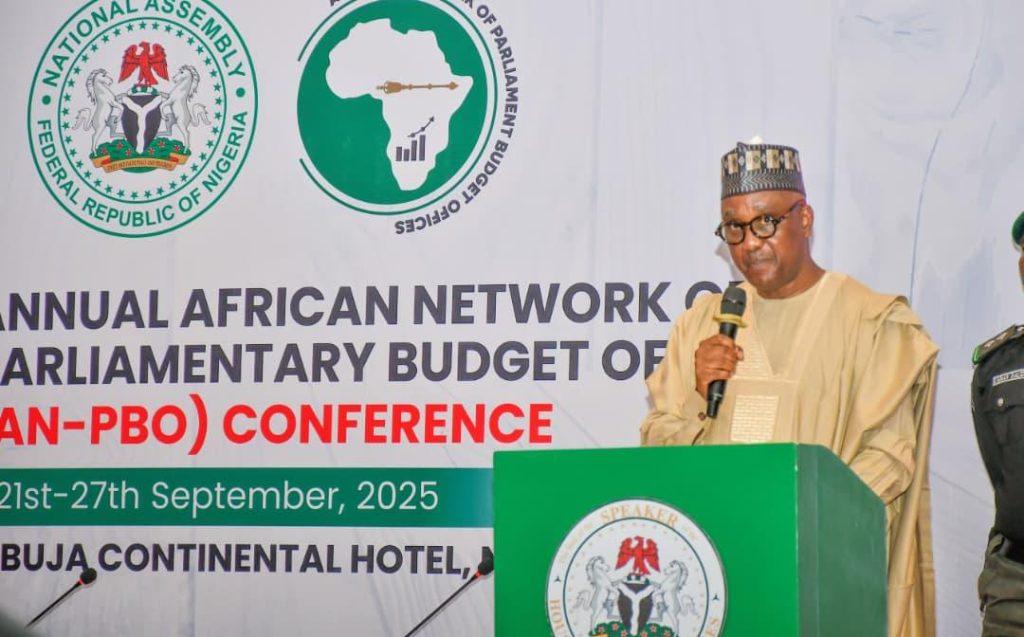
The Speaker of the House of Representatives, Dr Abbas Tajudeen, says it is firmly backing President Bola Tinubu’s plans to borrow.
According to him such measures are vital for financing critical infrastructure and stimulating economic growth.
Dr Abbas who made the declaration while delivering a keynote address at the 8th Annual African Network of Parliamentary Budget Offices Conference in Abuja clarified that the legislature has consistently supported responsible and targeted borrowing to meet Nigeria’s pressing developmental needs.
According to him, strategic and responsible borrowing is an essential fiscal tool, saying that Nigeria must sometimes leverage credit to finance critical infrastructure, stimulate growth, and protect vulnerable populations.
He assured Nigerians that all borrowings under President Tinubu’s administration are designed to be transparent, sustainable, and in line with Nigeria’s medium-term debt strategy and global best practices.
“Recently, a speech delivered by the House leader at the West Africa Parliamentary Conference was horrendously and mischievously reported out of context, creating the false impression that the House of Representatives does not support the borrowing strategy of the President Tinubu administration. We should state clearly that this interpretation is both inaccurate and misleading.
“The House and indeed the National Assembly have consistently affirmed that in the face of present developmental needs, strategic and responsible borrowing is an essential fiscal tool. Like every modern economy, Nigeria sometimes liberates credit to finance critical infrastructure. Stimulate growth and protect vulnerable populations. ”
“What is important and what the President has assured is that all borrowings remain targeted, transparent and sustainable, consistent with Nigeria’s medium-term debt strategy and guided by global best practices”.
“Under our President’s leadership, borrowed forms are being channelled towards transformative projects that will expand revenue-generating capacity, such as power, transport, and agriculture, rather than for consumption”.
“The House stands firmly behind the President’s vision of using judicial borrowing as a catalyst for growth and poverty reduction while simultaneously strengthening oversight mechanisms,” Mr Tajuddeen said.
Disclosing that Nigeria loses an estimated $18 billion every year to financial crimes, representing roughly 3.8 per cent of the country’s GDP, the speaker stressed the urgent need for strengthened parliamentary fiscal oversight to safeguard public resources.
He warned that the continent collectively loses over $587 billion annually due to corruption, illicit financial flows, and inefficiencies.
“Africa is at the crucial crossroads in its history, with a population of approximately 1.4 billion people, roughly one-sixth of humanity. Our continent is young, growing and breathing with potential. Nigeria, as Africa’s most populous nation, with over 200 million people and a GDP of around $477 billion in 2022, carries a special responsibility in this African story.”
“We are a continent of abundant resources and talented youth, and we have bold ambitions captured in the African Union Agenda 2063, which serves as the blueprint for the Africa we want. However, the path to realising this vision remains difficult. Economic growth in sub-Saharan Africa is recovering, although modestly, with the World Bank projecting an increase from 3.3 per cent in 2024 to 3.5 per cent in 2025.
“This is indeed encouraging, but it is not yet sufficient to meet our development needs. Poverty remains widespread. An estimated 464 million Africans live in extreme poverty as of 2024. Unemployment and underemployment, especially among young people, are urgent issues”.
“Each year, 12 million young Africans enter the labour market, yet only around 3 million formal jobs are created. This gap in opportunities highlights a potential demographic dividend that could turn into a demographic risk if we do not take action,“ he said.
He noted that these funds, if properly managed, could significantly enhance social infrastructure, providing better schools across the continent.
The Chairperson of the African Network of Parliamentary Budget Offices (AN-PBO), Professor Dumisani Jantjies, warned that Africa’s economies remain highly vulnerable to external shocks, including volatile capital flows, global trade disruptions, and climate change impacts.
He said the African Parliamentary Budget Offices (PBOs) are emerging as critical instruments in ensuring fiscal transparency, policy accountability, and alignment with the continent’s long-term development goals.
He commended Nigeria’s recent macroeconomic reforms, adding that economic growth had reached 3.4 per cent in 2024, the highest in a decade, yet cautioned that inflation and poverty remain pressing concerns.
“Our mandate is to provide legislatures with credible, non-partisan, evidence-based analysis to enable informed fiscal decisions,” he said.
The Clerk to the National Assembly,
Kamorudeen Ogunlana
called for stronger fiscal accountability across the continent, urging participants to use the conference as an opportunity for innovation and renewed commitment.
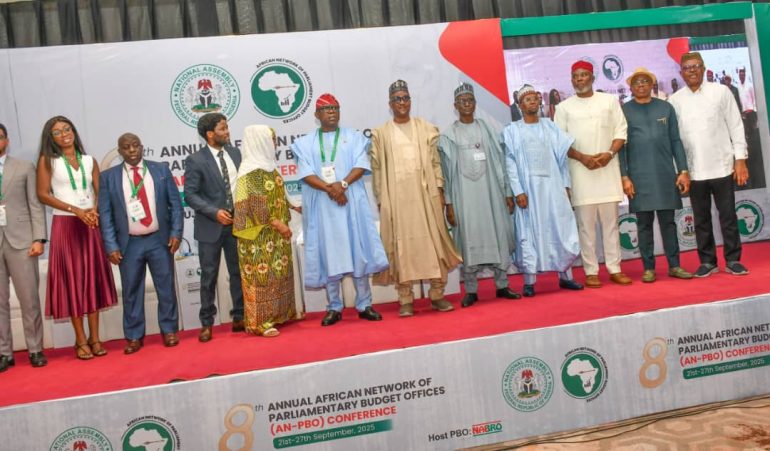
The conference, hosted by the Nigerian National Assembly and the National Assembly Budget and Research Office (NABRO), focused on “The Role of PBOs in African Parliaments’ Fiscal Oversights: Contribution to the African 2063 Development Agenda.”
Oduyemi Odumade, Edited By Grace Namiji


Post comments (0)