Listeners:
Top listeners:
-
 play_arrow
Kapital FM 92.9 The Station that Rocks!


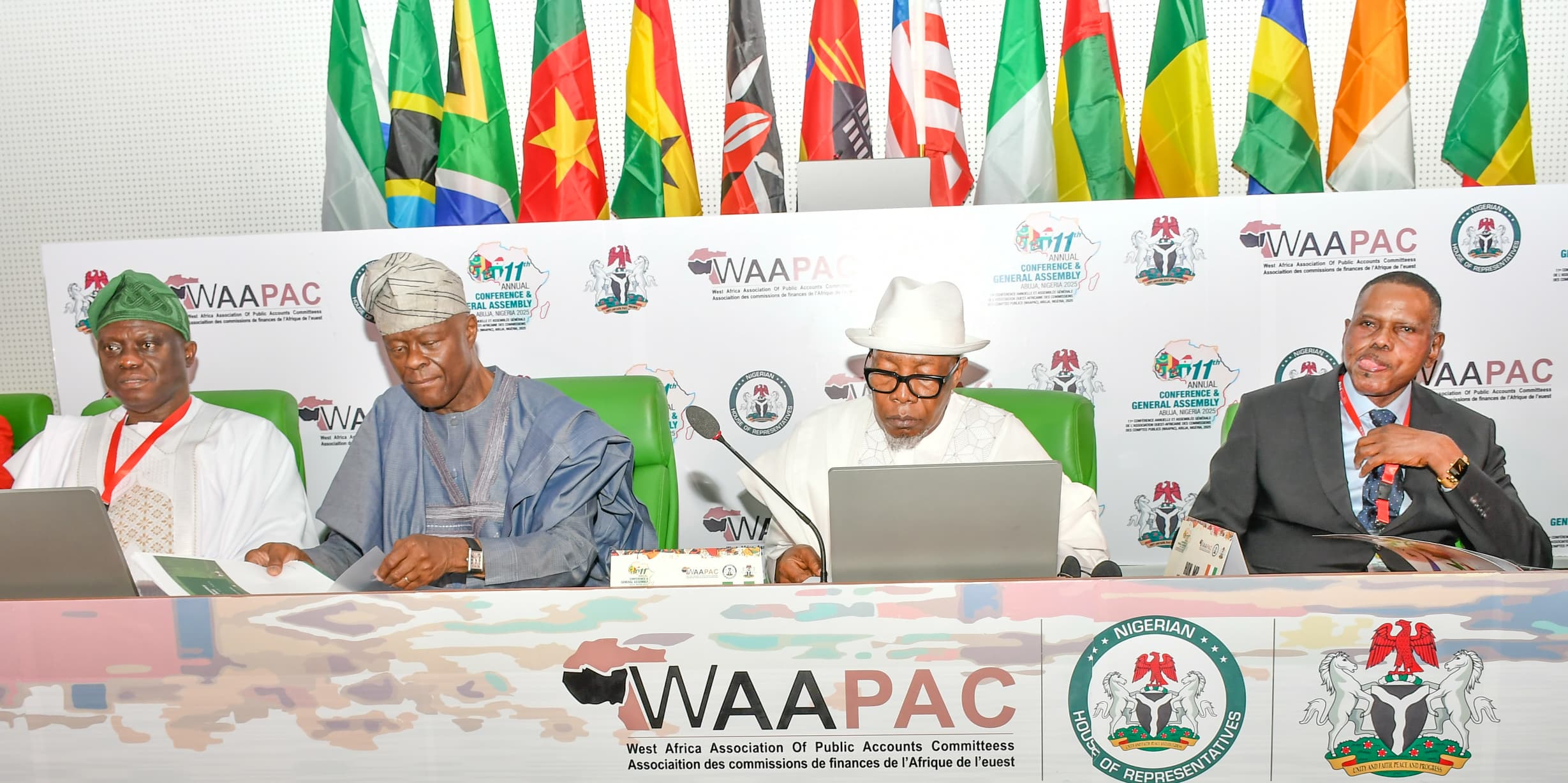
The Minister of Finance and Coordinating Minister of the Economy, Mr Wale Edun, says economic reforms introduced by President Bola Tinubu-led Administration are beginning to stabilise the economy, with revenues rising and debt level becoming more sustainable.
Mr. Edun stated this in Abuja at the 11th Annual Conference and General Assembly of the West Africa Association of Public Accounts Committees, WAAPAC, organised by the House of Representatives Committee on Public Accounts, with the theme: “Strengthening Parliamentary Oversight of Public Debt.”
He disclosed that Nigeria’s debt service-to-revenue ratio had dropped to about 60 percent in 2024, while the debt-to-GDP ratio stands at 38.8 percent, which he described as a comfortable level compared to global benchmarks.
Revenues, he noted grew by 34.7 percent in the first half of 2025 compared with the same period last year, expanding fiscal space for investment in priority sectors.
Edun credited the gains to tough but necessary policy choices such as the removal of fuel subsidies, liberalization of the exchange rate, and the roll-out of a comprehensive tax reform programme aimed at boosting efficiency, simplifying compliance, and raising Nigeria’s tax-to-GDP ratio over time.
He urged lawmakers to hold governments accountable for borrowing and spending decisions, insisting that transparency and accountability must underpin every fiscal framework.
Also speaking, the President of the Senate, Godswill Akpabio called on West African countries to strengthen constitutional backing for public accounts and finance committees in order to guarantee transparency, accountability, and sustainability in public debt management.
Represented by Senator Osita Izunaso, Akpabio said unchecked debt can mortgage the future of citizens and undermine democracy across the sub-region.
Akpabio described parliamentary oversight as indispensable to fiscal stability, noting that when debt is well managed, it serves as a strategic instrument for financing infrastructure, growth, and sustainable development.
He urged all WAAPAC member nations to provide legislative or constitutional authority for such committees, saying this would guarantee their independence and effectiveness in protecting public resources
In his remarks the Speaker of the House of Representatives, Dr Abbas Tajudeen, the Speaker of the House of Representatives, Dr. Abbas Tajudeen expressed concern that across Africa, debt has become a structural crisis, with several countries spending more on servicing loans than on healthcare and other essential services.
Represented by House Leader, Professor Julius Ihonvbere, Dr Abbas said the country would push for a regional debt oversight framework to curb reckless borrowing on the continent.
Chairman of the House of Representatives Committee on Public Accounts, Bamidele Salam, disclosed that the committee recovered over ₦200 billion in lost revenues for the federal government within the last one year noting that the recoveries were part of a series of reforms to strengthen fiscal accountability in Nigeria.
He described the gathering, which Nigeria is hosting for the first time since WAAPAC’s creation in 2009, as timely, given the rising debt burden across Africa.
Highlighting milestones recorded by the Public Accounts Committee, the lawmaker said the committee had, for the first time since Nigeria’s return to democracy in 1999, completed reports that were considered and adopted by the House.
He also noted that the House had passed the long-awaited Audit Bill, which is now before the Senate.
Salam revealed that the committee had embarked on digitalising its hearings and internal operations to enhance transparency and efficiency.
Oduyemi Odumade, Edited By Grace Namiji
Post comments (0)