Listeners:
Top listeners:
-
 play_arrow
Kapital FM 92.9 The Station that Rocks!


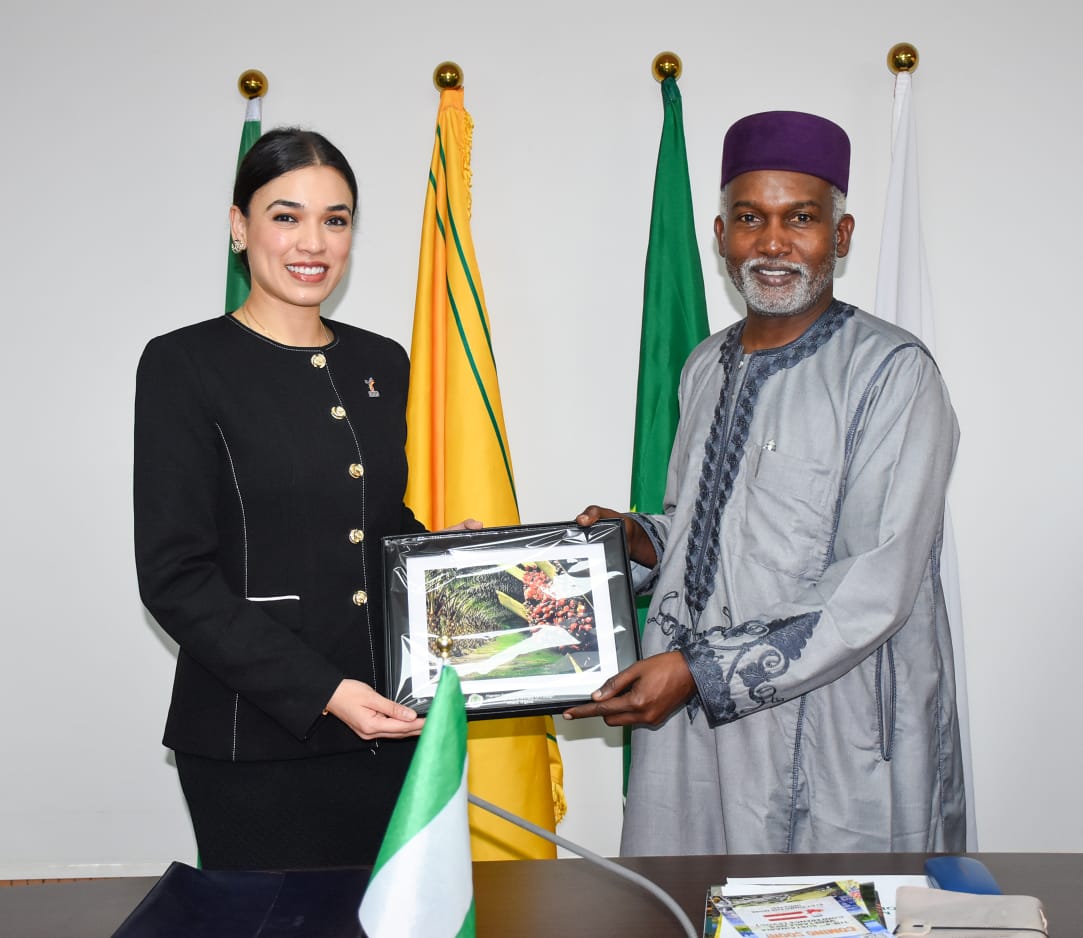
Nigeria has reiterated its commitment to positioning palm oil as a strategic driver of economic growth, food security, and diversification.
The Minister of Foreign Affairs, Ambassador Yusuf Tuggar, made this known during a meeting with Izzana Salleh, Secretary-General of the Council of Palm Oil Producing Countries (CPOPC), who led a delegation on a visit to the ministry.
Ambassador Tuggar noted that palm oil has long played a critical role in global industrial development and remains essential across multiple sectors, including food production, pharmaceuticals, cosmetics, and manufacturing.
He described negative narratives surrounding the commodity in some international circles as inconsistent with historical realities and stressed the need for producing nations to promote evidence-based perspectives.
He emphasised that for Nigeria, palm oil is not merely an agricultural product but a key pillar of rural livelihoods, food security, and economic transformation.
According to the minister, Nigeria currently produces about 1.4 million metric tonnes of palm oil annually, against an estimated domestic consumption of three million tonnes.
He disclosed that the Federal Government has set ambitious targets to significantly scale up production in the coming years.
Ambassador Tuggar described Nigeria’s potential transition to full membership of the CPOPC as a strategic move aligned with national priorities, including economic growth, youth employment, and agricultural competitiveness.
He added that joining the council would enhance Nigeria’s voice in global commodity diplomacy while enabling access to coordinated advocacy, sustainability frameworks, and technical cooperation.
Earlier, CPOPC Secretary-General Izzana Salleh said the visit was aimed at strengthening institutional engagement with Nigeria, particularly as the country’s observer status with the organisation is set to expire at the end of the year. She underscored the importance of early consultations to ensure a smooth transition to full membership.
Salleh explained that the CPOPC serves as a diplomatic and advocacy platform for major palm oil-producing countries, addressing trade barriers, regulatory issues, and sustainability concerns. She also revealed that the council’s leadership had agreed to waive Nigeria’s membership fees for two years should the country become a full member.
Also speaking, Tony Lee, Director for Smallholders and Sustainability at the CPOPC, highlighted the council’s capacity-building and training initiatives, especially in Africa. He stated that palm oil accounts for roughly 60 per cent of global vegetable oil supply and remains vital for food security, poverty reduction, and rural development.
Lee stressed that empowering smallholder farmers through improved agricultural practices and sustainability compliance is crucial for the long-term resilience of the sector.
PR/Uju Oparaji
Post comments (0)