Listeners:
Top listeners:
-
 play_arrow
Kapital FM 92.9 The Station that Rocks!


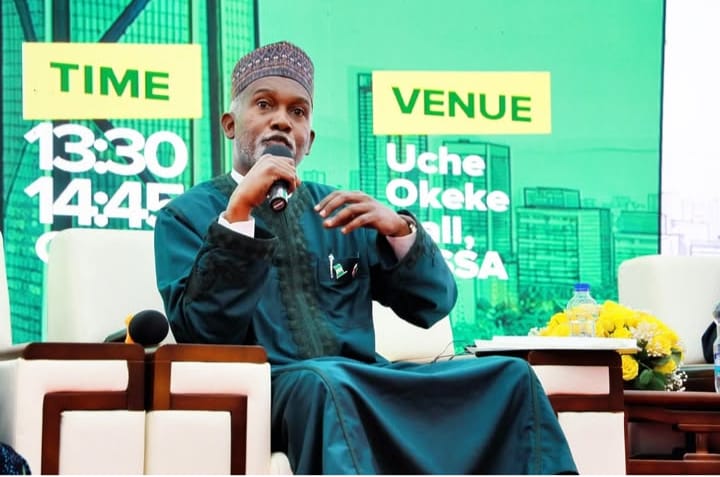
Foreign Affairs Ministers of member states of the African Union have called for renewed commitment to strengthen the organisation’s institutional frameworks to enable it respond more effectively to Africa’s development, governance and security challenges.
The call was made at the AU Executive Council, which held its 48th Ordinary Session in Addis Ababa, Ethiopia, from February 11 to 12, 2026.
The Ministers stressed that a stronger, more united and responsive Union remains critical to advancing shared continental priorities through deeper cooperation and collective responsibility among member states.
As one of the African Union’s principal policy organs, the Executive Council, comprising Foreign Ministers and designated representatives, provides a platform for aligning continental policies with Africa’s long-term aspirations under Agenda 2063.
The session reaffirmed the Union’s resolve to strengthen governance structures, promote peace and security, and accelerate implementation of Agenda 2063, popularly referred to as “The Africa We Want.”
Discussions were guided by the theme: “Assuring sustainable water availability and safe sanitation systems to achieve the goals of Agenda 2063,” placing water security and sanitation at the heart of Africa’s socio-economic transformation.
In practical terms, the ministers reviewed the report of the Permanent Representatives’ Committee, assessed AU participation in the G20, and considered elections, legal instruments and institutional reforms.
While noting progress recorded in 2025, delegates said stronger coordination was needed to consolidate gains, particularly in advancing regional integration through the African Continental Free Trade Area.
Opening the meeting, Angola’s Foreign Minister and Chair of Council, Tete Antonio, described the session as a defining moment to assess achievements and chart the future direction of the Union.
He reaffirmed member states’ commitment to strengthening AU institutions and called for active engagement and collaboration to ensure effective delivery on agreed mandates.
Ethiopia’s Foreign Minister, Gedion Timothewos, warned that unconstitutional changes of government and weakening multilateral cooperation continue to threaten Africa’s unity, stressing that only a strong and united Africa can defend its interests globally.
On his part, the Chairperson of the AU Commission, Mahmoud Youssouf, linked the sanitation theme to climate resilience, describing water as a shared continental asset and a catalyst for peace.
Similarly, the Executive Secretary of the United Nations Economic Commission for Africa, Claver Gatete, underscored the need for coordinated economic strategies to sustain development and environmental gains.
Nigeria’s Minister of Foreign Affairs, Yusuf Tuggar, called for stricter fiscal discipline, stronger institutional accountability and timely implementation of audit recommendations across AU organs, warning that inefficiencies could undermine institutional performance.
Overall, member states reiterated the principle of African ownership of African solutions, anchored on constitutional order, peace and sovereignty, while renewing calls for fairer representation in global governance, including reform of the United Nations Security Council.
They agreed that institutional strength, financial accountability and deeper cooperation among member states remain key to building a resilient, self-reliant and united Africa.
PR/Uju Oparaji
Post comments (0)