Listeners:
Top listeners:
-
 play_arrow
Kapital FM 92.9 The Station that Rocks!


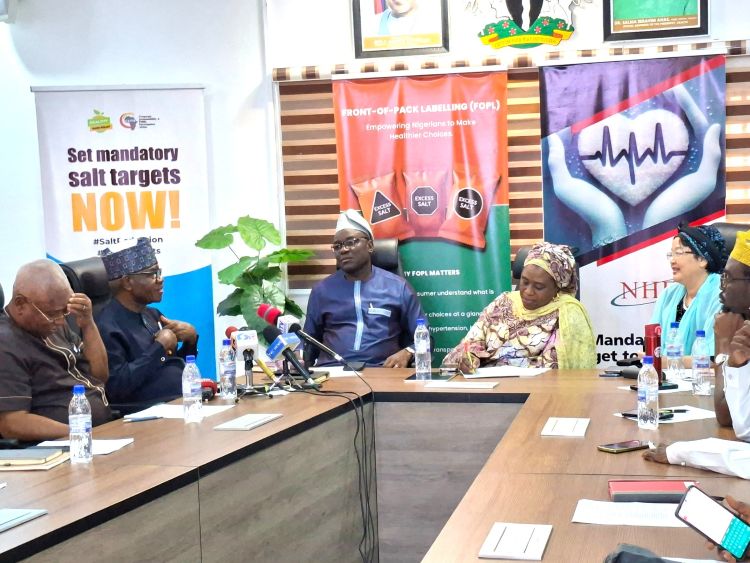
Stakeholders in the health sector have stressed the need for the federal government to adopt and implement standards for Front-of-Pack Labeling and marketing restrictions as well as improve surveillance on salt/sodium population intake.
At a Media Engagement Meeting on Sodium Reduction and Front of Pack Labelling (FOPL) campaigns as part of activities to mark the 2025vWorld Food Day in Abuja, the World Health Organization Nigeria, Cluster Lead
Disease Prevention and Control Cluster, Dr. Mya Sapal Ngon called on Industry to implement the National sodium targets and benchmarks, reformulate food products to contain less salt.
Dr. Mya also urged Civil society and consumers to advocate and demand for lower sodium in processed foods.
”Mass media to promote behavioral change communication and campaigns to raise awareness on salt consumption reduction including social marketing to reduce sodium and promote the intake of healthier foods.”
 According to Dr Mya, ”We remain committed in supporting Members States to implement, monitor and enforce policies and other measures to ensure that every adult and child enjoys healthy food environments to realize their human right to safe, secure and nutritious food, and the highest attainable standard of health.”
”We pledge our continuous technical support towards the successful implementation of sodium reduction strategy, Nutrition Profiling, Front of Pack labelling and monitor progress.”
”In doing so, by not only updating Country Score Cards and periodically publishing global progress reports, but also refining the algorithms, assumptions and methods used in these activities as new evidence and guidance become available,” she said.
The WHO Cluster Lead noted that media professionals are key partners in the journey to ensure Nigerians live sodium-free.
”Your platforms reach millions, your voices shape public opinion, and your stories have the power to inspire change.”” By raising awareness about the dangers of excessive sodium intake and advocating for clear, accessible food labelling, you help empower Nigerians to make healthier choices.”
She added that the WHO was promoting efforts to address social determinants of health across life course by making it a priority in its Global Health Agenda.
Speaking on ”Protecting Nigerians’ Health through National Leadership and Commitment to Global Action on Sodium Reduction and Front-of-Pack Labelling the Special Adviser to the President on Health and Policy Champion for Sodium Reduction, Dr. Salma Ibrahim Anas, noted that Nigeria faced a rising and preventable burden of diet-related non-communicable diseases, including hypertension, heart disease, and stroke.
Dr. Salma pointed out that excessive sodium intake was a major, modifiable driver of high blood pressure and avoidable illness across the population.
” The toll of poor diets extends beyond the clinic, it reduces household income, weakens workforce productivity, and increases the fiscal burden of healthcare on families and the state.”
According to her ” Reducing population sodium intake is therefore both a public health imperative and an economic priority that requires coordinated action across ministries, regulators, industry, and communities.”
”Alarmingly, many Nigerians consume salt in excess of the recommended levels set by the World Health Organization, this dietary habit significantly contributes to higher blood pressure and avoidable health complications.”
She explained that the implications of the health challenge extend far beyond individual well-being.
”They ripple through our economy, impacting family incomes, workforce productivity, and escalating healthcare costs. Therefore, addressing sodium intake is not merely a health concern; it is a pressing economic priority that demands collective and sustained action across sectors.”
She noted that the Renewed Hope Agenda provides the mandate, policies that provide the mechanism to address the challenge, and also enacted a robust set of regulatory policies.
Dr Salma pointed out that front-of-pack labelling gives consumers clear, visible information so families can easily recognise foods that are high in salt, sugar, or unhealthy fats and make healthier choices.
” Simple symbols and mandatory sodium declarations on nutrition panels drive transparency, strengthen consumer confidence, and create a market incentive for producers to reformulate.”
”Mandatory sodium limits protect those who cannot easily change behaviour by ensuring the food environment supports healthier defaults, together, these policies make it easier for every Nigerian to see, know, and choose what they eat,” she added.
On his part, the Technical Lead, Network for Health Equity and Development (NHED), Dr Jerome Mafeni
expressed concern that Nigeria was experiencing a silent but growing crisis of diet-related non-communicable diseases.
According to Dr Jerome, ”Hypertension, heart disease and stroke are increasing at alarming rates, affecting people in their most productive years.”
”The World Health Organization identifies excess sodium intake as one of the leading dietary risk factors for these diseases.”
He said that evidence shows that the average Nigerian consumes well above the recommended daily limit of 2,000 milligrams of sodium, roughly one teaspoon of salt.
”This has significant consequences, rising medical costs, reduced productivity and preventable deaths, reducing sodium intake is therefore not only a health intervention but also a development priority that affects our economy and human capital.”
”Nigeria’s actions align with the WHO SHAKE package for salt reduction and contribute directly to achieving Sustainable Development Goal 3.4, which seeks to reduce premature deaths from NCDs by one third by 2030.”
Dr Jerome noted that NHED’s Role and the Power of Partnership as a civil-society organisation, works to bridge the gap between policy and people.
”We translate technical data into advocacy messages that mobilise action, build public understanding and sustain accountability.”
”Through our coordination with partners such as CAPPA and GHAI, we help ensure that sodium reduction and FOPL remain visible on the public-health agenda.”

Post comments (0)