Listeners:
Top listeners:
-
 play_arrow
Kapital FM 92.9 The Station that Rocks!


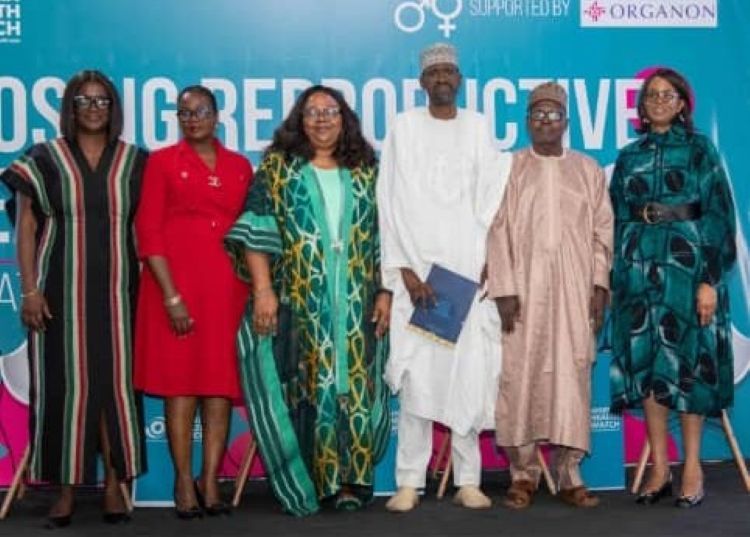
The Federal Government in partnership with stakeholders, has drawn out policies, frameworks and guidelines to provide strategic direction in addressing inequities and access to Sexual Reproductive Health services in Nigeria.
The Minister of Health and social Welfare, Professor Ali Pate made this known in Abuja at a one day National Policy Dialogue on Improving Adolescent Access to Sexual and Reproductive Health Services.

The Minister who was presented by the Director of Family Health at the Ministry, Dr. Binyerem Ukraine said there was need for the government to ensure that every Nigerian regardless of their income, education and status have access to family planning services.
According to her, ” The gap in reproductive health impacts manifest as disparities in Access to family planning information and services resulting to inequities in health outcomes.”
” These gaps are often due to barriers shaped by economic, sociocultural, religious and geographical factors, funding and human resources challenges among others.”
Dr Binyerem Ukraine noted that despite policies and global commitments, SRHR access in Nigeria remains out of reach for many especially youth, rural women and underserved communities.
” Access in this context implies availability, affordability, acceptability and appropriateness of SRH services and information.”

‘We can’t close SRHR gaps without confronting the funding crisis, Policies need resources, Services need commodities.”
The Managing Director of Nigeria Health Watch, Mrs Vivianne Ihekweazu is of the opinion that Nigeria’s story on SRHR is complex, despite policy frameworks, national strategies, and global commitments.
”Yet despite this, too many people especially young people, rural women and girls, underserved communities, even in our major cities not having access to basic reproductive health services and commodities.”
According to her, ”We cannot talk about achieving Universal Health Coverage, or SDG 3 and 5, while overlooking the reality that access to contraception, maternal and newborn care, safe abortion services, STI treatment, and sexual health education remains inconsistent, underfunded, and out of reach for millions of Nigerians.’‘
The Managing Director said the objectives of the dialogue is to highlight programme impact gaps and elevate evidence-based approaches to close the gaps in demand generation and service accessibility for adolescents.
She said the meeting was also to identify strategic bottlenecks to adolescent contraceptive access and explore scalable, state-specific interventions that reflect local needs and realities.
”Elevate adolescent voices to ensure interventions are shaped by the lived experiences of young people, especially girls, in underserved communities.’‘
”Mobilise stakeholder commitment towards delivering sustainable, high-impact results in adolescent reproductive health at both national and subnational levels.”
According to her, ”We must not continue to pretend that we don’t know what the issues are. We continue to face the same recurring issues: low funding, poor integration of services, stockouts, weak political will, and fragmented coordination. ”
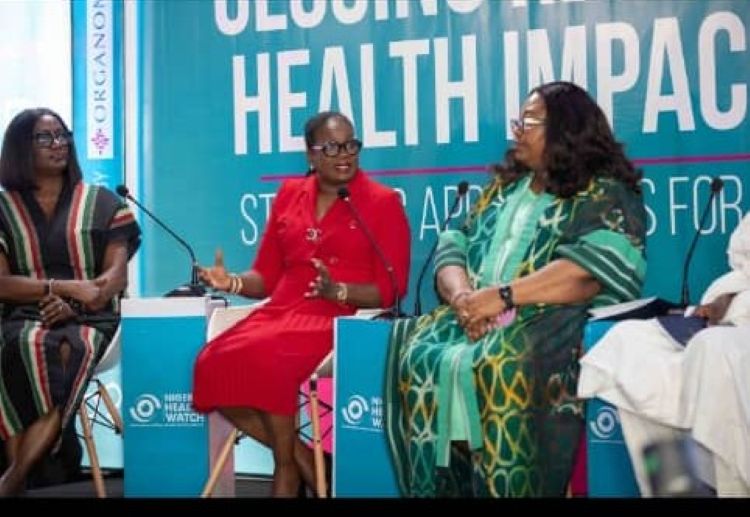 Mrs Vivianne Ihekweazu expressed worry that in 2025 the Federal funding for family planning has been slashed by 97%, dropping from ₦2.2 billion in 2024 to just ₦66 million this year.
”There is zero allocation for contraceptive commodities and no provision for counterpart funding to attract donor resources, we cannot talk about closing reproductive health impact gaps without confronting this funding crisis head-on, without resources, policies remain promises.” she added.
In a presentation, Insights on Access and Barriers to Sexual and Reproductive Health and Rights” the Knowledge Management Lead at Nigeria Health Watch, Anwuli Nwankwo identified lack of awareness as the common barrier to accessing SRHR services.
”The study did not delve into the underlying reasons – is it due to ineffective public health campaigns, illiteracy, language barriers, or community gatekeepers controlling information flow? Without understanding why awareness is lacking, interventions might not be fully targeted or effective, she said.
She stressed the need to engage community and religious leaders, and local influencers to challenge harmful cultural beliefs and norms that impede SRHR access with sensitive and sustained dialogue.
”Ensuring that PHCs are well-equipped, adequately staffed with trained personnel, and have consistent supplies to deliver quality SRHR services, as they are the most accessible entry point for the majority, she added.


Post comments (0)