Listeners:
Top listeners:
-
 play_arrow
Kapital FM 92.9 The Station that Rocks!


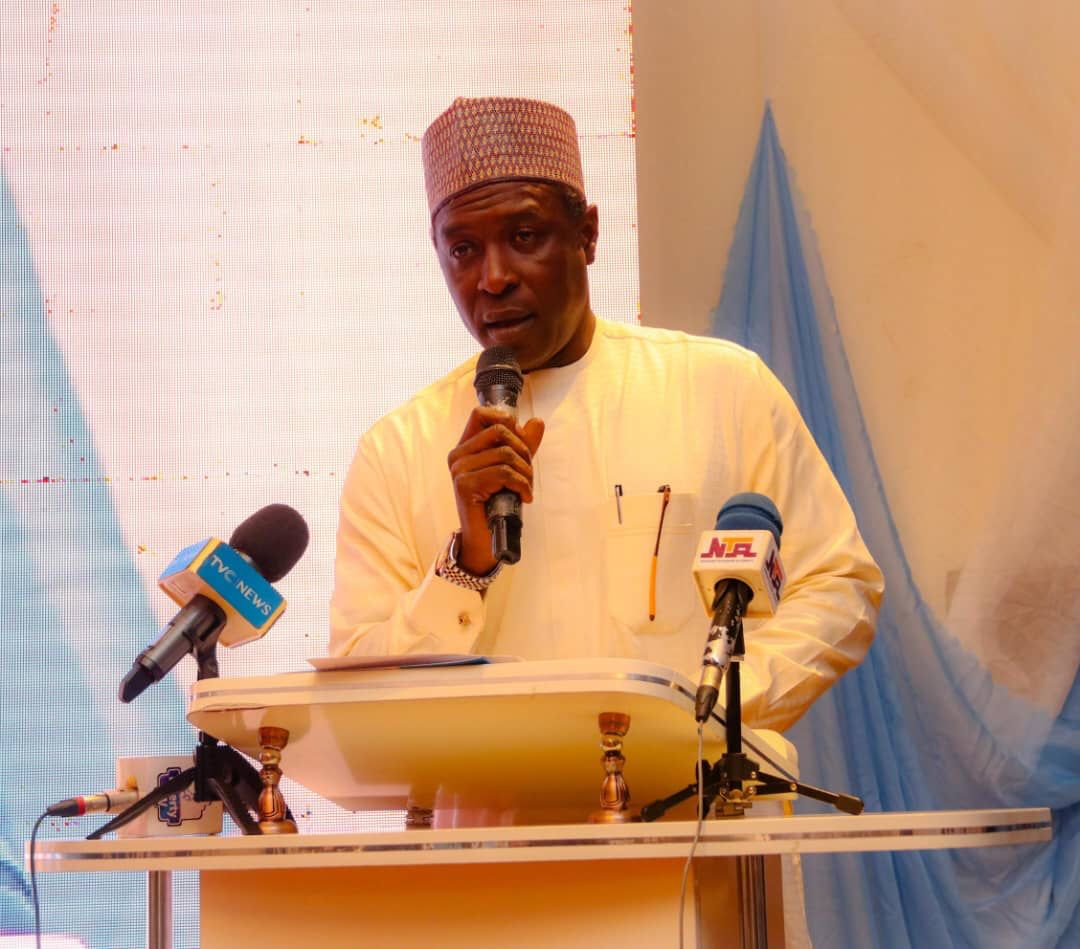
The Federal Government has revealed that 1,249 communities across 176 Local Government Areas LGAs in 30 states, including the Federal Capital Territory FCT, are at high risk of flooding this year.
The Minister of Water Resources and Sanitation, Prof. Joseph Terlumun Utsev, stated this during the official unveiling of the 2025 Annual Flood Outlook, AFO, by the Nigeria Hydrological Services Agency, NIHSA, in Abuja.
Prof. Utsev further explained that an additional 2,187 communities in 293 LGAs are expected to experience moderate flooding.
He emphasized that flooding remains one of the most destructive natural disasters affecting the country.
Speaking on the theme; Flood Resilience: “Focusing on Communities Preparedness and Adaptive Strategies for Flood Management.” Prof Utsev highlighted this year’s AFO introduces a community based flood forecasting approach rather than just general predictions.
“Forecasts are now tailored to specific communities, enhancing actionable communication and preparedness at the grassroots level” the Minister added.
“The High Flood Risk States are: Abia, Adamawa, Akwa Ibom, Anambra, Bauchi, Bayelsa, Benue, Borno, Cross-River, Delta, Ebonyi, Edo, Gombe, Imo, Jigawa, Kebbi, Kogi, Kwara, Lagos, Nasarawa, Niger, Ogun, Ondo, Osun, Oyo, Rivers, Sokoto, Taraba, Yobe, Zamfara and the Federal Capital Territory”
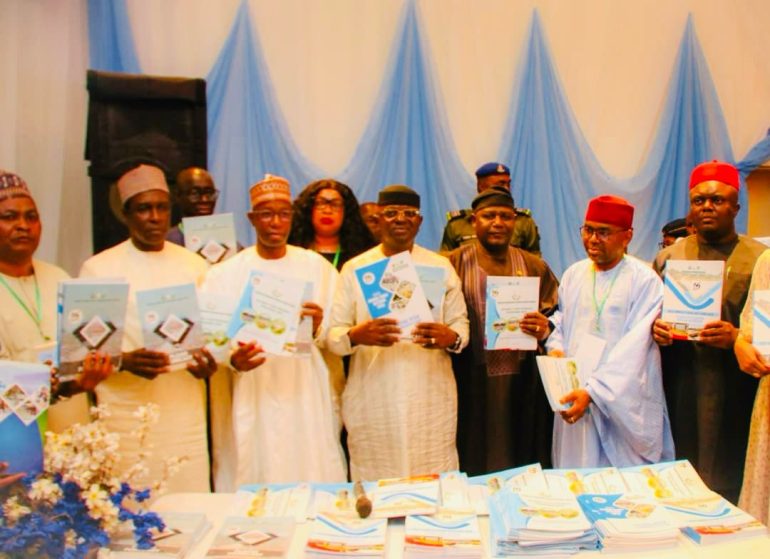
Earlier, in his welcome address, the Permanent Secretary, Mr. Richard Pheelangwah urged stakeholders to prioritize early response noting that the annual flood outlook isn’t just about numbers, but about protecting lives and livelihoods.
On his part, the Director General and Chief Executive Officer of NIHSA, Umar Ibrahim Mohammed, noted that this year’s flood forecast goes beyond mapping LGAs and now identifies specific communities at risk.
“Our focus has expanded to assess sectoral impacts, on health, education, agriculture, and infrastructure, offering more robust tools to policymakers and disaster risk managers.”
He added that the AFO’s enhanced methodology is the result of continuous feedback, technological advancement, and broad inter-agency collaboration.
“We are transforming flood data into real-time decisions and impactful resilience-building,” he said.
The 2025 AFO presentation signals a new chapter in Nigeria’s flood management strategy, one that emphasizes preparedness, science-driven planning, and community empowerment.
By Georgina Humphrey

Post comments (0)