Listeners:
Top listeners:
-
 play_arrow
Kapital FM 92.9 The Station that Rocks!


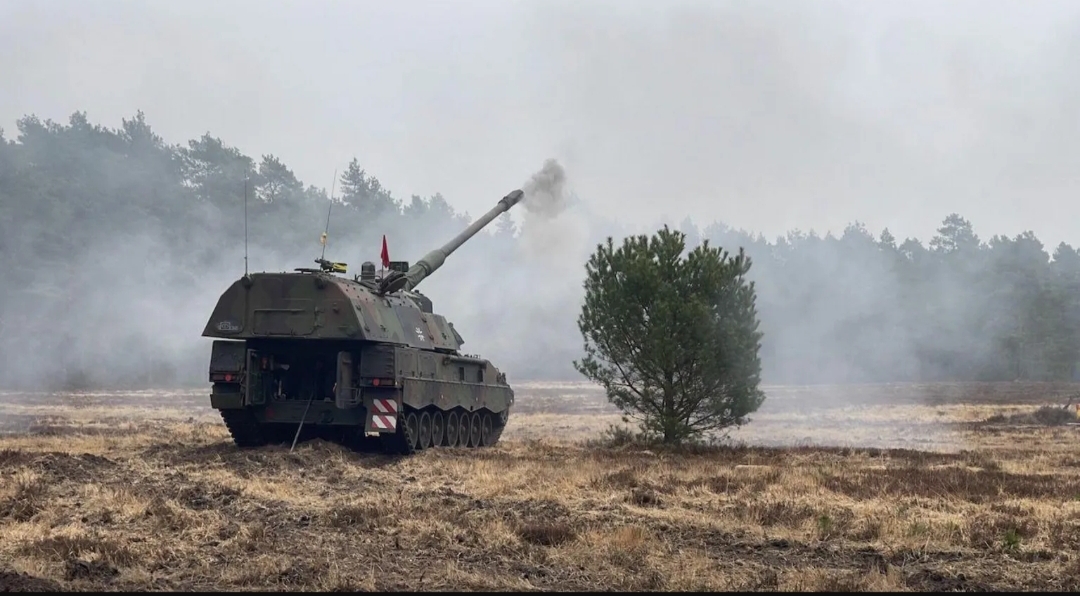
A missile launcher sends a cloud of brown dust into the air as it hurtles across a field towards the firing line. Moments later comes a soldier’s countdown, from five to ‘Fire!’, before a rocket roars into the sky.
The blasts and booms from such military training exercises are so constant that locals in the nearby small town of Munster barely notice anymore.
But life here is set to get even louder.
Germany’s military, the Bundeswehr, recently got the all-clear for a massive increase in investment after parliament voted to exempt defence spending from strict rules on debt.
The country’s top general has told the BBC the cash boost is urgently needed because he believes Russian aggression won’t stop at Ukraine.
“We are threatened by Russia. We are threatened by Putin. We have to do whatever is needed to deter that,” Gen Carsten Breuer says. He warns that Nato should be braced for a possible attack in as little as four years.
“It’s not about how much time I need, it’s much more about how much time Putin gives us to be prepared,” the defence chief says bluntly. “And the sooner we are prepared the better.
Russia’s full-scale invasion of Ukraine has changed thinking in Germany profoundly.
For decades people here have been raised on a rejection of military might, acutely aware of Germany’s past role as the aggressor in Europe.
“We started two world wars. Even though it’s 80 years since World War Two ended, the idea that Germans should stay out of conflict is still very much in many people’s DNA,” explains Markus Ziener of the German Marshall Fund in Berlin.
Some remain wary of anything that might be seen as militarism even now, and the armed forces have been chronically underfunded.
“There are voices cautioning: ‘Are we really on the right track? Is our threat perception right?'”
When it comes to Russia, Germany has had a specific approach.
Whilst countries like Poland and the Baltic States cautioned against getting too close to Moscow – and increased their own defence spending – Berlin under former Chancellor Angela Merkel believed in doing business.
Germany imagined it was delivering democratisation by osmosis. But Russia took the cash and invaded Ukraine anyway.
So in February 2022 a stunned Chancellor Olaf Scholz declared a national pivot in priorities, a “Zeitenwende”.
That’s when he committed a giant €100 billion ($108bn; £83bn) to boost the country’s military and keep “warmongers like Putin” in check. But General Breuer says it wasn’t enough.
“We filled up a little bit the potholes,” he recounts. “But it’s really bad.
By contrast, he points to heavy spending in Russia on weapons and equipment, for stocks as well as the frontline in Ukraine.
He also highlights Russia’s hybrid warfare: from cyber attacks to sabotage, as well as unidentified drones over German military sites.
Add to that Vladimir Putin’s aggressive rhetoric and General Breuer sees “a really dangerous mixture.”
“Unlike the western world, Russia is not thinking in boxes. It’s not about peacetime and war, it’s a continuum: let’s start with hybrid, then escalate, then back. This is what makes me think we are facing a real threat.”
He argues Germany has to act fast.
BBC


Post comments (0)