Adoption Of Innovative Technology In Agricultural Production
Nigeria is uniquely blessed with enormous factors that positively drive abundant food production for local consumption and export.
Unfortunately, this has been neglected at the detriment of improved economy, poverty alleviation, food sufficiency and national security.
On the contrary, other countries that were poor have used great investments in agriculture to improve their economy and living conditions.
For instance, Israel was poor after independence in 1948, and by 1951. Israel was unable to import enough food to feed herself.
Singapore was even in a worse situation when it became independent in 1965 with more than two-thirds of her population living in slums and squatter settlements.
However, both countries managed to transform their economies through major investments in agriculture, trade, and education.
The same can be done in Nigeria when given the right drive, determination, and investment of resources.
In the nation’s current circumstances, investment into innovative and technological-drive agriculture is the most practicable, affordable, and speedy means of revamping the economy.
Over the years, Nigeria has focused more on the oil sector as her main source of revenue while downplaying the great potential of the agricultural sector which she has a comparative advantage over many countries.
For instance, according to the World population review and the Food and Agricultural Organization, Nigeria is the world’s largest producer of cassava, with a production of 60,000 metric tons in 2020.
This position underscores Nigeria’s significant role in the global cassava market, not only as a primary producer but also potentially affecting global supply and price dynamics due to its substantial output.
Sadly, this production capacity is supported and driven by local production systems instead of innovative technology of mechanized agriculture.
Nigeria’s production capacity can be increased ten-folds if the country adopts innovative technological approach at all levels, especially at the grassroots.
It must be emphasized that if there is any profession in which Nigerians should acquire great technical skills and innovative technology, it is animal and plant agriculture.
The country must awaken its consciousness to its natural endowment and take advantage of its potential to become the first runner in the global agricultural revolution.
To achieve this, Nigeria should declare a state of emergency on agriculture and create a culture of non-oil economic diversification where a trajectory of agricultural revolution must not only be a new norm but also sustainable at all costs.
Government at all levels must prioritize innovative and technologically-drive agricultural practices by procuring modern agricultural equipment and set out effective and efficient modalities for easy access by farmers to access to these equipment.
They should as a matter of urgency address the demand for human capital development in form of training and retraining in all aspects of innovative and technologically-driven agricultural practices.
Agricultural development banks should be sited in every local government in the country for better performance.
Agricultural extension officers should also be made to interface regularly with farmers rather than remaining in their offices.
Government agencies such as the National Youth Service Corps scheme should be reformed to make the teeming graduates to be more productive in the area of agriculture.
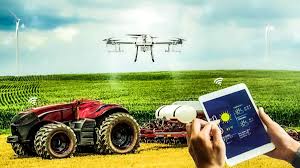
The country should introduce key technological innovations such as precision farming, drone technology, artificial intelligence crop management, vertical farming, Real-Time Kinematic Technology, Minichromosome Technology, Agricultural Robotics, eco-friendly and sustainable farming practices, to get it right in the nation’s Agricultural practice.
The contributions of professionals can also help shape a future where technology and agriculture coexist in harmony, ensuring food security, economic growth and environmental sustainability for generations to come.
Finally, the government should create enabling environment for a synergy between researchers, policy makers, financial institutions and farmers for an effective implementation of technology-driven agricultural practices in Nigeria.
By Prof Lawrence Okonkwo, Edited By Grace Namiji
 play_arrow


Commentary
Adoption Of Innovative Technology In Agricultural Production
todayMay 26, 2024
Adoption Of Innovative Technology In Agricultural Production
Nigeria is uniquely blessed with enormous factors that positively drive abundant food production for local consumption and export.
Unfortunately, this has been neglected at the detriment of improved economy, poverty alleviation, food sufficiency and national security.
On the contrary, other countries that were poor have used great investments in agriculture to improve their economy and living conditions.
For instance, Israel was poor after independence in 1948, and by 1951. Israel was unable to import enough food to feed herself.
Singapore was even in a worse situation when it became independent in 1965 with more than two-thirds of her population living in slums and squatter settlements.
However, both countries managed to transform their economies through major investments in agriculture, trade, and education.
The same can be done in Nigeria when given the right drive, determination, and investment of resources.
In the nation’s current circumstances, investment into innovative and technological-drive agriculture is the most practicable, affordable, and speedy means of revamping the economy.
Over the years, Nigeria has focused more on the oil sector as her main source of revenue while downplaying the great potential of the agricultural sector which she has a comparative advantage over many countries.
For instance, according to the World population review and the Food and Agricultural Organization, Nigeria is the world’s largest producer of cassava, with a production of 60,000 metric tons in 2020.
This position underscores Nigeria’s significant role in the global cassava market, not only as a primary producer but also potentially affecting global supply and price dynamics due to its substantial output.
Sadly, this production capacity is supported and driven by local production systems instead of innovative technology of mechanized agriculture.
Nigeria’s production capacity can be increased ten-folds if the country adopts innovative technological approach at all levels, especially at the grassroots.
It must be emphasized that if there is any profession in which Nigerians should acquire great technical skills and innovative technology, it is animal and plant agriculture.
The country must awaken its consciousness to its natural endowment and take advantage of its potential to become the first runner in the global agricultural revolution.
To achieve this, Nigeria should declare a state of emergency on agriculture and create a culture of non-oil economic diversification where a trajectory of agricultural revolution must not only be a new norm but also sustainable at all costs.
Government at all levels must prioritize innovative and technologically-drive agricultural practices by procuring modern agricultural equipment and set out effective and efficient modalities for easy access by farmers to access to these equipment.
They should as a matter of urgency address the demand for human capital development in form of training and retraining in all aspects of innovative and technologically-driven agricultural practices.
Agricultural development banks should be sited in every local government in the country for better performance.
Agricultural extension officers should also be made to interface regularly with farmers rather than remaining in their offices.
Government agencies such as the National Youth Service Corps scheme should be reformed to make the teeming graduates to be more productive in the area of agriculture.
The country should introduce key technological innovations such as precision farming, drone technology, artificial intelligence crop management, vertical farming, Real-Time Kinematic Technology, Minichromosome Technology, Agricultural Robotics, eco-friendly and sustainable farming practices, to get it right in the nation’s Agricultural practice.
The contributions of professionals can also help shape a future where technology and agriculture coexist in harmony, ensuring food security, economic growth and environmental sustainability for generations to come.
Finally, the government should create enabling environment for a synergy between researchers, policy makers, financial institutions and farmers for an effective implementation of technology-driven agricultural practices in Nigeria.
By Prof Lawrence Okonkwo, Edited By Grace Namiji
Written by: Salihu Tejumola
Adoption Of Innovative Technology In Agricultural Production
Similar posts
Business
APC Poised To Take Over Abia State- Deputy Speaker
todayOctober 6, 2025
Commentary
Tenant-Landlord Relationship In Nigeria: Rights And Responsibilities
todayAugust 29, 2025
Post comments (0)
Recent Video
Recent Posts