Listeners:
Top listeners:
-
 play_arrow
Kapital FM 92.9 The Station that Rocks!



The World Health Organisation has stressed the need for all Countries including Nigeria to adopt the global sodium benchmarks to reduce salt consumption in the population to protect cardiovascular health and help prevent many other diseases.
The Country Representative of WHO, Nigeria,Dr Walter Mulombo stated at a media briefing to mark this year’s World Salt Awareness Week in Abuja.
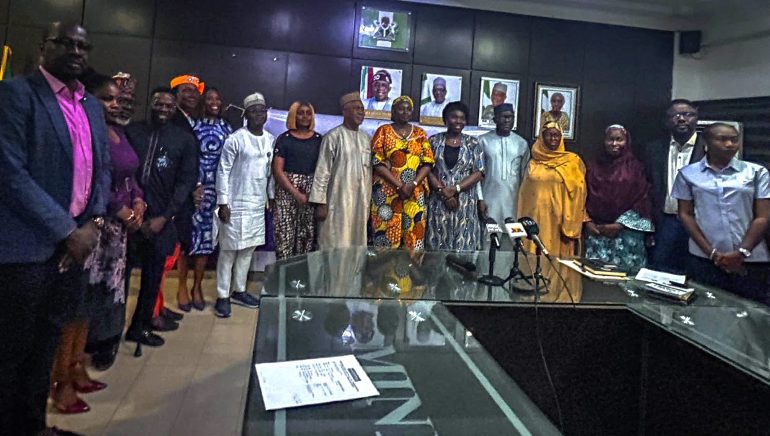 Represented by the WHO Nigeria National Programme Officer, Nutrition, Dr. Pindar Wakawa noted that excessive salt consumption was linked to non-communicable diseases like high blood pressure, cardiovascular diseases, gastric cancer, and kidney diseases.
”As we may all be aware, excessive salt consumption is linked to non-communicable diseases like high blood pressure, cardiovascular diseases, gastric cancer, and kidney disease.”
”The global average intake Of sodium is more than double the WHO recommendation, highlighting the urgency of this public health message,” he said.
According to him,” This year’s theme is “It’s time to shine the spotlight on salt,” highlighting the issue of the “hidden” salt (sodium) in many processed and ultra-processed products.
”In many countries, three-quarters of sodium in the diet comes from ultra-processed and processed foods, such as bread, sauces and dressings, crackers and cookies, ready-to-eat meals.” The Country Representative said.
He said WHO was promoting efforts to address social determinants of health across life course by prioritizing it in its Global Health Agenda.
The Permanent Secretary, Federal Ministry of Health and Social Welfare, Ms. Daju Kachollom said there was a need to bring attention to the impact of excessive salt consumption in the lives of Nigerians.
”In our quest for a healthier Nigeria, we have embarked on several pivotal initiatives that are worth highlighting today, these efforts are not just plans on paper; they are commitments etched in the very fabric of our national health policy.”
”One is the National Multi-sectoral Action Plan (NMSAP) for the Prevention and Control of Non-Communicable Diseases 2019, this plan, aligned with the World Health Organization’s SHAKE package, and is a testament to our dedication to combating the silent epidemic of non-communicable diseases through strategic policy intervention,” she said.
”Revision of the National Policy on Food Safety & Quality and its Implementation Plan for 2023, this revision includes a crucial,” she added,
The Permanent Secretary therefore called on all stakeholders in the health sector to be the vanguards of change, educate communities, collaborate with industry partners, and empower every individual to reduce salt intake in the country.
On his part, the Technical Advisor, the Network for Health Equity and Development, Dr. Jerome Mafeni, called for systems and policies to reduce sodium intake in Nigeria.
“If we can begin to put in place the policies and interventions that would make our people realize that the Salt that they enjoy taking in their food is what is actually killing them, we can get them to begin to change their taste for salt.”
Also, the Executive Director Resolve to Save Lives, Nanlop Ogbureke promised to collaborate with relevant stakeholders to curb salt intake and promote healthier alternatives in the country.
”We are ready to collaborate with relevant stakeholders, to sensitize citizens on the importance of minimizing sodium consumption in diets across the country.’‘
Post comments (0)