Written By Chikezie Chinkata, Abuja Operations, FRCN
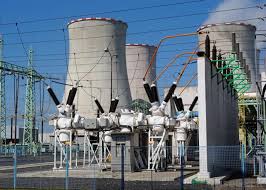
Recently President Bola Amed Tinibu performed the groundbreaking ceremony of the Gwagwalada, Independent Power Plant Project, in the Federal Capital Territory, marking the commencement of another national investment toward checking the challenges of energy supply in the country.
The problem of the nation’s Power sector transverses decades if not up to a century going by available data.
History of the Challenges and development of the sector could be traced back to 1886 when two generating sets were installed in Lagos, by the administration of the Lagos colony.
In 1951, the Electricity Corporation Of Nigeria ECN came into effect by the Act of Parliament.
Subsequently, the Nigeria Dam Authority, NDA, was established in 1962.
In its efforts towards enhancing Power generation, the then Military administration merged the ECN and NDA, to establish the National Electric Power Authority, NEPA, in 1971, saddled with the responsibility of generating, transmitting, and distributing electricity for the whole country.
NEPA, for over fifty years unsuccessfully tried to meet the mandate of ensuring an adequate supply of electricity to Nigerians.
This development resulted in the unbundling of the components of the generating entities through the establishment of the Power Holding Companies Of Nigeria, PHCN, and the signing into law of the Electricity Power Sector Reform, EPSR, in 2005, to pave the way for private companies participation in electricity generation, transmission and distribution.
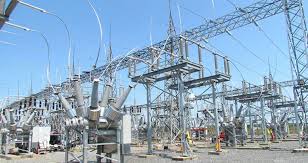
The aftermath of the power sector reform Act includes the emergence and establishment of Independent Power Plants in parts of the country.
Apart from the already existing Independent Power Plants, the most recent one expected to be completed in the next three years, is the 1,350MW, Combined Cycle Power Plant with auxiliaries and Balance of plant, to be situated on 54.7 hectares of land at Gwagwalada, in the Federal Capital Territory, Abuja.
The main purpose of this project among other side benefits is to ensure that the citizens are supplied with energy adequate for industrial growth.
So much has been expended in the power sector but recent statistics indicate that the journey is still far.
Currently, the nation can generate 12,522MW, of electricity from existing power plants but it hardly generates more than 4,000 MW, an output that may not be enough for a few states of federation.
World Bank records indicate that Nigeria needs to connect between 500,000 to 800,000 new households with electricity yearly up to the year 2030 before the country will be able to attain universal electricity supply to the citizens.
This is just an insight into the position of the nation’s power sector and its challenges.
Nevertheless, prospects are going by the determination of the government to break the jinx at the groundbreaking ceremony of the recent power plant located in the Federal Capital Territory.
The declaration of the President to remove all obstacles against the stable supply of electricity should be upheld by all stakeholders by ensuring that the project commences operations within the three years fixed for it.
To achieve this means that all efforts and resources allocated for the project should be channeled to it.
Though Policies, programmes, and laws are necessary to accomplish a task it is only sufficient when these variables help mankind to satisfy their basic needs. In the words of a renowned Political Scientist, Professor Obasi Igwe, argued while commenting on the works of other political philosophers, that no law is worth it unless it contributes to human welfare.
The Thermal Power Plant, project in the FCT, will contribute to human welfare if completed. So every effort to accomplish it should be sustained and laws, policies, and procedures that could hinder it should be jettisoned.
 play_arrow


Commentary
Gwagwalada Independent Power Plant, Prospects Of Power Generation In The Country
todaySeptember 24, 2023
Written By Chikezie Chinkata, Abuja Operations, FRCN
Recently President Bola Amed Tinibu performed the groundbreaking ceremony of the Gwagwalada, Independent Power Plant Project, in the Federal Capital Territory, marking the commencement of another national investment toward checking the challenges of energy supply in the country.
The problem of the nation’s Power sector transverses decades if not up to a century going by available data.
History of the Challenges and development of the sector could be traced back to 1886 when two generating sets were installed in Lagos, by the administration of the Lagos colony.
In 1951, the Electricity Corporation Of Nigeria ECN came into effect by the Act of Parliament.
Subsequently, the Nigeria Dam Authority, NDA, was established in 1962.
In its efforts towards enhancing Power generation, the then Military administration merged the ECN and NDA, to establish the National Electric Power Authority, NEPA, in 1971, saddled with the responsibility of generating, transmitting, and distributing electricity for the whole country.
NEPA, for over fifty years unsuccessfully tried to meet the mandate of ensuring an adequate supply of electricity to Nigerians.
This development resulted in the unbundling of the components of the generating entities through the establishment of the Power Holding Companies Of Nigeria, PHCN, and the signing into law of the Electricity Power Sector Reform, EPSR, in 2005, to pave the way for private companies participation in electricity generation, transmission and distribution.
The aftermath of the power sector reform Act includes the emergence and establishment of Independent Power Plants in parts of the country.
Apart from the already existing Independent Power Plants, the most recent one expected to be completed in the next three years, is the 1,350MW, Combined Cycle Power Plant with auxiliaries and Balance of plant, to be situated on 54.7 hectares of land at Gwagwalada, in the Federal Capital Territory, Abuja.
The main purpose of this project among other side benefits is to ensure that the citizens are supplied with energy adequate for industrial growth.
So much has been expended in the power sector but recent statistics indicate that the journey is still far.
Currently, the nation can generate 12,522MW, of electricity from existing power plants but it hardly generates more than 4,000 MW, an output that may not be enough for a few states of federation.
World Bank records indicate that Nigeria needs to connect between 500,000 to 800,000 new households with electricity yearly up to the year 2030 before the country will be able to attain universal electricity supply to the citizens.
This is just an insight into the position of the nation’s power sector and its challenges.
Nevertheless, prospects are going by the determination of the government to break the jinx at the groundbreaking ceremony of the recent power plant located in the Federal Capital Territory.
The declaration of the President to remove all obstacles against the stable supply of electricity should be upheld by all stakeholders by ensuring that the project commences operations within the three years fixed for it.
To achieve this means that all efforts and resources allocated for the project should be channeled to it.
Though Policies, programmes, and laws are necessary to accomplish a task it is only sufficient when these variables help mankind to satisfy their basic needs. In the words of a renowned Political Scientist, Professor Obasi Igwe, argued while commenting on the works of other political philosophers, that no law is worth it unless it contributes to human welfare.
The Thermal Power Plant, project in the FCT, will contribute to human welfare if completed. So every effort to accomplish it should be sustained and laws, policies, and procedures that could hinder it should be jettisoned.
Written by: Elizabeth David
gwagwalada KFM929 Plant POWER
Similar posts
Business
APC Poised To Take Over Abia State- Deputy Speaker
todayOctober 6, 2025
Commentary
Tenant-Landlord Relationship In Nigeria: Rights And Responsibilities
todayAugust 29, 2025
Post comments (0)
Recent Video
Recent Posts