Listeners:
Top listeners:
-
 play_arrow
Kapital FM 92.9 The Station that Rocks!


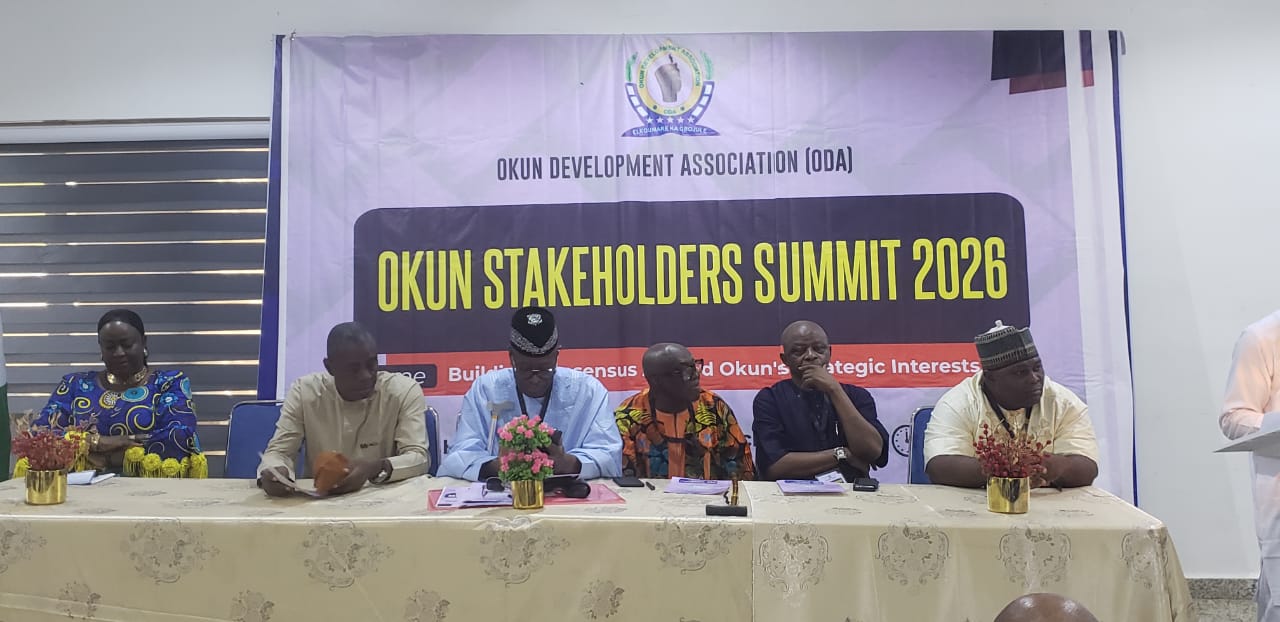
Former Chief of Staff to Vice President Atiku Abubakar, Prince Olusola Akanmode, has called for sustained political engagement, collective responsibility, and inclusive governance as necessary conditions for stability and development in Kogi State.
Speaking at a consultative meeting in Abuja organised by Okun Stakeholders from Kogi State, Akanmode said the agitation for fairness and power shift is neither new nor misplaced.
He stressed the need for strategic mobilisation and unity among stakeholders to advance the long-standing quest for power rotation.
According to him, the demand dates back to 1999 and has remained consistent through subsequent election cycles, reflecting a deep-rooted belief in the qualification and readiness of the people.
Prince Akanmode noted that while political power is not an entitlement, governance must embody justice, equity and inclusiveness for society to thrive.
He cautioned against relying solely on population strength as a basis for political exclusion, arguing that such a posture undermines cohesion and hinders the state’s progress.
Describing his constituency as one of the most intellectually endowed in Kogi, he warned that continued marginalisation could deprive the state of quality and transformational leadership.
He criticised the lack of transparency and equitable distribution of democratic dividends, saying the Nigerian experience has shown that development should not depend on where a leader comes from.
Referencing global development trends, Akanmode said population growth and socio-economic pressures are not insurmountable.
He urged leaders and communities to take responsibility, build strategic alliances, and intensify legitimate advocacy to shape a better political future for Kogi State.
In his welcome address, Ambassador Akenson Rotimi, President-General of the Okun Development Association, called for greater unity and a stronger collective sense of purpose among Yoruba-speaking communities.
He said the mandate of the movement provides the platform for strengthening communities, developing a clear consensus on priorities, and crafting social and political solutions that reflect the true aspirations of the people.
He noted that as a key socio-cultural organisation of the Yoruba nation, the association recognises unity as its greatest strength and warned that fragmentation remains the biggest obstacle to collective advancement.
Ambassador Rotimi explained that the meeting was convened to harmonise diverse views, align common interests, and establish a practical framework for collaborative action across Okunland and the wider Yoruba community.
He expressed confidence that the deliberations would unify the organisation’s leadership structure and support the development of an effective action plan for the region’s political progress and overall welfare.
According to him, all submissions will be synthesised into a comprehensive communiqué capturing the collective views, demands, and aspirations of the people, which remains the primary objective of the engagement.
On his paper presentation titled “Political Marginalisation, Power Rotation, and the 2027 Transition,” the Former Deputy Vice-Chancellor (Administration) of the Federal University Oye-Ekiti, Prof. Shola Omotola, called for urgent reforms in governance, equitable political inclusion, and strategic planning as Kogi State approaches another election cycle.
He said years of political depression before 1999 and the return to democracy have heightened the people’s awareness of fairness, competence, and inclusive leadership, adding that uneven development and the drive to retain power at all costs have weakened transparency, trust in institutions, and economic growth across the state.
Highlighting historical grievances, Prof. Omotola noted that ethnic diversity should strengthen the state, but exclusion has persisted in communities denied leadership opportunities.
He cited past controversies, including the handling of the 2016 oil pipeline project, and warned that rising insecurity and underdevelopment in key districts continue to fuel demands for justice and equitable governance.
According to him, the agitation for power rotation is not about conflict but ensuring communities have a fair chance to participate in leadership.
He acknowledged significant challenges ahead, including the power of incumbency, the timing of the movement alongside the 2027 presidential election, and resistance from entrenched political actors.
Despite these hurdles, Prof. Omotola stressed that discipline, unity, mobilisation, and strategic coalition-building at local, national, and international levels can advance inclusive governance.
“The 2027 agenda must not be shaped by fear or doubt. It must be shaped by strategy, unity and the democratic right of every community to be heard,” he stated.
Georgina Humphrey

Post comments (0)