Listeners:
Top listeners:
-
 play_arrow
Kapital FM 92.9 The Station that Rocks!



Lack Of Awareness And Support Mar Community-Oriented Project In Nigeria
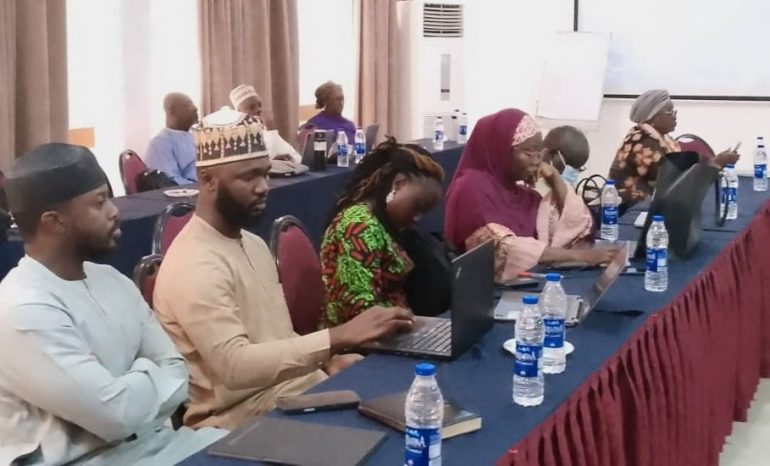
Stakeholders in health and Community Development have converged in Abuja to develop and adopt a National Health Financing model for a visible health financing solution.
At the event in Abuja, the National Team Lead for the Lafiya UK and Nigeria Partnership for a Healthier Future, Dr Usman Gwarzo, said the meeting was an upstream flexible and adaptive program to address bottlenecks toward universal health coverage.
Dr Gwarzo noted that it also aims to upstream support, which includes institutionalization, policy development, and strengthening systems.
 ” So basically, we’re into governance, healthcare financing and the use of data for decision making, health security, including climate and democracy. This activity we’re doing is under our second pillar, which talks about healthcare finance.’‘
”In healthcare financing, we give it a two way approach, the public health financing, where we work with government agencies at all levels in planning, resource mobilization, budgeting, tracking, expenditures of budget and also performance tracking, supporting basic healthcare provision fund improve improvement in healthcare value chain,” he said.
According to him, ” In 2021 this idea came out, and we started thinking, okay, what are the low hanging fruits for alternative political finance? You know, it’s always difficult to create a new will, but it’s easier if you see an opportunity, we’re always opportunistic, and new opportunity is to see a low hanging fruit and see how we can harness some of those opportunities.”
Also speaking, the Director General of Kharat Islamic Trust, Bayero University Kano, Dr Muhammad Nura Abdullahi noted that the model has helped to fund projects in the state.
”We wanted our fund to be domestic, and we wanted to utilize the mechanism of workup to generate all what we need from our projects. And also we come out with the idea of transport, we call it modesty transport, which used to transport student, university, student and school service in general.
According to him, ”Through this transport, we generate income for our project, and then we have, again, substantive education of this often, as I said earlier, about 15 of them memorized the entire Quran, and they are doing very well in their Western education.”
 Dr Abdullahi also highlighted some challenges encountered during the implementation of the project, which include related to donors, challenges related, beneficiaries related challenges and managerial challenges.
” You face so many challenges from the general public, but to me, the core challenges is lack of awareness, many people are not aware of this Islamic based initiative, and the donors, most of them, they have their own way and their own method of helping others, so they are not ready to collaborate with local organizations to donate their home and the beneficiaries too.
”Most of the beneficiaries believe that it is very difficult for somebody to do such kind of activities. Sincerely, it must have, like maybe he has political agenda, or he has he wanted to do business with basic needs and from the general public.”
”I forgot that is what is related to the family like us, we involved in this program, and people trust us, and it is very difficult to have like 24 hours without receiving alert in our account. And people see us like business or like rich men, and we face challenges from even immediate relatives.”
Explaining further he said,” Many beneficiaries believe that you are doing business ,So when you invite donors or when you wanted to help them, some of them think that you are benefiting and you are doing business. So this is another area which is related to them.’
On his part, Dr. Warshu Tijjani Rabiu of the International Institute of Islamic Banking and Finance, Bayero University, Kano, noted that the concept of ethical health finance was structured and designed to cater for the shortfall in providing the needed funds for the health issues in Nigeria.
”If you look around, you will see many families are battling and swimming in poverty and when it comes to health care financing, they don’t have enough to go by. Some of them, you see them begging, going around with the bills, hospital bills looking for some people to come to their aid.”
”So funds are coming as aid and these funds, we cannot rely on them forever, So when this program, LIHEAP program come around, we look into something that is going to be really in line with the belief of the local people so we can really tap the resources from within and allocate it to cater for the people that are in the need within that locality.”
According to him, ”So we designed this program that each local government where we are working in five states, Kano, Kaduna, Jugawa, Yobe and Borno, We need to form an organization that is working on zakah and wakaf. they collect, they look into the needs within the local government and they channel these resources.”
He added that the primary objective of it. and main focus was to cater for the health and the vulnerable women and children.

Post comments (0)