Listeners:
Top listeners:
-
 play_arrow
Kapital FM 92.9 The Station that Rocks!


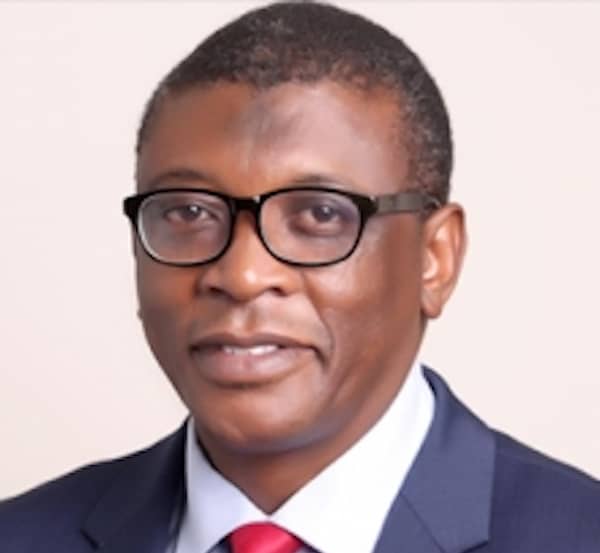
The Director General of the West African Institute for Financial and Economic Management, WAIFEM, Dr. Baba Yusuf Musa, has warned that Nigeria’s persistent budget deviations are the result of deep-rooted fiscal risks that continue to undermine the country’s ability to manage public resources effectively.
According to him, the most powerful factor weakening Nigeria’s budget performance is the narrow fiscal space that leaves the government unable to absorb shocks.
Dr. Musa explained that over the years, Nigeria has consistently recorded large variances between budget forecasts and actual outcomes, not because of poor planning alone but because “the underlying fiscal risks are not being addressed adequately.” According to him, unexpected economic shocks repeatedly derail revenue expectations and create expenditure pressures that Nigeria’s budget is too fragile to withstand.
Speaking during and interview with Radio Nigeria, the WAIFEM DG noted that fiscal pressures remain one of the most significant constraints for countries in West Africa, especially Nigeria. “Many of our economies are operating with extremely limited fiscal space, and this makes it difficult to respond effectively to emerging challenges without destabilizing the budget,” he said.
He recalled that the COVID-19 pandemic exposed these vulnerabilities more sharply, forcing governments, including Nigeria to embark on emergency spending far beyond approved budget frameworks. “COVID-19 was a stress test we were not prepared for. It compelled governments to take measures that were never anticipated at the point of budget preparation,” Dr. Musa stated.
Beyond the pandemic, Dr. Musa highlighted additional fiscal risks such as rising food insecurity, climate-related disruptions, and spillover effects from the crisis in Sudan. These challenges, he said, have expanded expenditure needs and affected revenue performance. “These shocks may originate outside our borders, but their impact on our economies is immediate and significant,” he added.
He observed that the combination of supply chain disruptions, population displacement, and increased security demands has forced Nigeria to allocate more resources to unplanned sectors. This, he said, widens the gap between planned budgets and actual implementation every year.
The WAIFEM boss also raised concerns over the rising debt profile in West Africa. According to him, many countries in the region are already at high risk of debt distress. “The reality is that several of our economies moved rapidly from moderate to high-risk debt categories because borrowing became the only option to finance emergency interventions,” he explained.
Dr. Musa stressed that this pattern of unplanned spending and excessive borrowing has weakened economic stability. “Every time we respond to a shock with new borrowing instead of resilience buffers, we push the debt sustainability threshold further away,” he warned.
He emphasized the urgent need to rebuild fiscal buffers to help countries withstand future shocks without resorting to unsustainable borrowing. Strengthening public financial management, improving debt transparency, and boosting domestic revenue mobilization, he said, are essential steps.
Concluding his remarks, Dr. Musa stated that the most pressing challenge for Nigeria and other West African nations is the lack of fiscal space. “Unless we strengthen resilience, manage risks proactively, and expand our revenue base, our budgets will continue to fall short of expectations. That is the reality we must confront,” he said.
PR/Umbwanko Baba


Post comments (0)