Listeners:
Top listeners:
-
 play_arrow
Kapital FM 92.9 The Station that Rocks!



The Federal Ministry of Livestock Development has convened a multi-stakeholder workshop in Abuja to validate the National Livestock Monitoring and Evaluation M&E Framework and harmonize the country’s livestock baseline data an exercise stakeholders described as central to transforming Nigeria’s livestock ecosystem.
The event, brought together federal and state officials, research institutions, academia, professional bodies, and development partners to align strategies toward building a modern, competitive, and data-driven livestock sector.
Declaring the workshop open, the Minister of Livestock Development Idi Mukhtar Maina represented by the permanent secretary Ijeoma Akujubi said the engagement marked a “defining moment in the transformation of Nigeria’s livestock sector,” emphasizing that the era of policymaking based on assumptions was over.
He noted that although Nigeria has generated extensive data over the years, from the National Livestock Identification and Traceability System (NLITS) to the Nigeria Animal Disease Information System (NADIS), grazing reserve digitalization, mobility mapping, laboratory surveillance, and other administrative and research platforms, the information remains scattered and insufficient for coherent national planning.
“These datasets, as rich as they are, sit in silos. They do not speak to each other. And when data is fragmented, policy becomes fragmented; when data is weak, investments become timid; and when data is inconsistent, planning becomes uncertain,” the Minister said.
He stressed that harmonizing national livestock data is now a “national imperative,” noting that without a unified architecture, Nigeria cannot accurately measure its national herd, track disease patterns, design bankable livestock projects, or attract serious investors.
The Minister said the M&E Framework under review will serve as the backbone for ensuring accountability, transparency, and improved delivery of the Ministry’s commitments under President Bola Ahmed Tinubu’s Renewed Hope Agenda, particularly in the areas of food security, job creation, revenue expansion, and a peaceful livestock production environment.
“This workshop is not about documents, it is about destiny… We are building a livestock sector that is smart, resilient, financially attractive, and globally competitive,” he added.
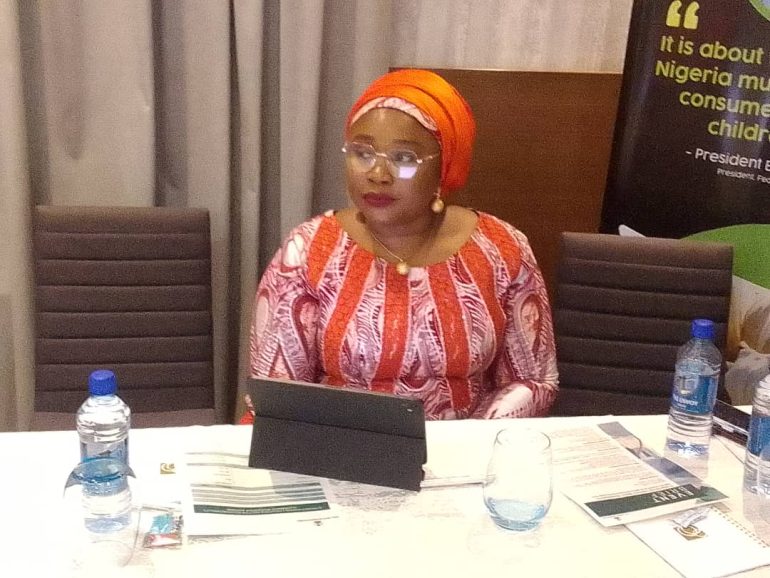
In her remarks, the Permanent Secretary of the Ministry underscored that the workshop reflects a new era of structured performance management within the Ministry, driven by accountability and alignment with national priorities.
She explained that the Ministry’s work plan is now anchored on deliverables derived directly from the President’s priority initiatives, which are further cascaded into departmental and individual performance targets.
“All departments, agencies, and stakeholders must key fully into the National Livestock M&E Framework. Our activities, whether in animal health, livestock production, research, traceability, extension, planning, or grazing reserve development, must feed into a unified performance system,” she stressed.
The Permanent Secretary warned that fragmented reporting undermines planning and resource allocation, while a harmonized livestock data system enhances decision-making, project appraisal, budget justification, and investment readiness.
She emphasized that Nigeria already generates substantial livestock-related data, but its value remains limited without integration.
“With harmonization, these datasets become powerful tools for policy intelligence, programme design, and strategic planning,” she said.
Both leaders urged participants to engage fully in validating indicators, refining baseline methods, clarifying roles, and establishing a robust reporting framework that will guide the livestock sector going forward.
Stakeholders at the workshop are expected to produce a harmonized national livestock baseline and a validated M&E Framework that will serve as the standard platform for tracking progress across all livestock-related activities nationwide.
The Ministry described the workshop as part of ongoing efforts to build a livestock sector where “data drives action, performance drives results, and results drive national development.”
Aisha Adesanya, Edited By Grace Namiji
Post comments (0)