Listeners:
Top listeners:
-
 play_arrow
Kapital FM 92.9 The Station that Rocks!


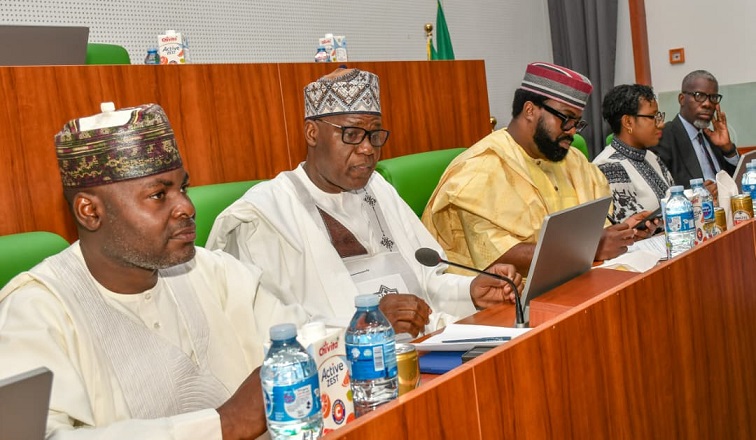
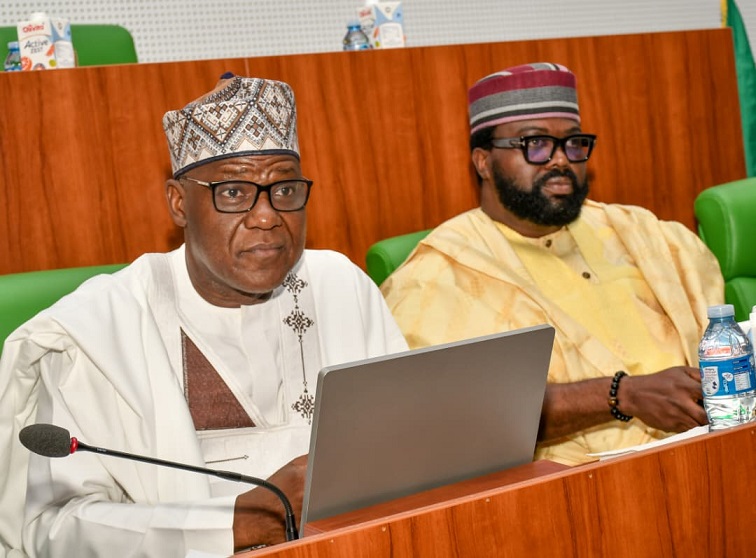
Former Speaker of the House of Representatives, Mr Yakubu Dogara, has described President Bola Tinubu’s sweeping tax reforms as the most ambitious overhaul of Nigeria’s fiscal framework in decades.
Mr Dogara made the remark while delivering the maiden Distinguished Parliamentarian Lecture organised by the House of Representatives Press Corps at the National Assembly Complex, Abuja with the theme “Navigating Tax Reform in Nigeria: Insights on President Tinubu’s Policies”, examined the origins, scope, and expected impact of the reforms encapsulated in the Nigeria Tax Act 2025 and related legislation.
He urged the government to prioritise transparency and sustained implementation to secure public trust.
The Former Speaker recalled that President Tinubu inherited a troubled economy riddled with “Economic debris,” including excessive deficit financing through Ways and Means, dual exchange rates that enriched a few at the expense of many, and crude oil forward sales tied to foreign loans.
“By the time President Tinubu took office, N22.7tn had been printed and injected into the economy, destroying the value of the naira. Some anointed people were making hundreds of millions off forex allocations without producing any goods or services whatsoever,” he said.
According to Dogara, these distortions made urgent reforms inevitable. “From day one, it was clear that something urgent, nay revolutionary, must be done to prevent our economy from imploding,” he stressed, praising the President’s courage in driving the reforms despite opposition.
He outlined key provisions of the reform package, which consolidate 16 federal tax statutes into four principal Acts: the Nigeria Tax Act 2025, Nigeria Tax Administration Act 2025, Nigeria Revenue Service (Establishment) Act 2025, and the Joint Revenue Board (Establishment) Act 2025. These laws will take effect in January 2026, simplifying Nigeria’s tax regime, broadening the tax net, and aligning rules with global standards.
Quoting the report of the Presidential Committee on Fiscal Policy and Tax Reform, chaired by Prof. Taiwo Oyedele, Dogara said the reforms were conceived to “protect the poor, empower businesses, encourage investment, and ensure fairness across society.”
Among the reliefs are exemptions for small companies with turnover of N100m or less, rent reliefs for salaried workers, and a full income tax exemption for individuals earning N800,000 or less annually.
He also addressed concerns over a five per cent fuel surcharge, clarifying it was not a new tax but a provision already in the Federal Roads Maintenance Agency Act, 2007.
“This safeguard eliminates recklessness and ensures timing and economic conditions are carefully considered,” he said.
While applauding the reforms, Dogara warned of challenges with interpretation, digital readiness, and compliance costs. “True tax reform is not about raising rates, but about raising trust. When citizens can see where their naira goes, they are proud to give it,” he said, urging government to channel revenues into infrastructure, healthcare, and education.
“This is a legacy that would impact generations after us and cement President Tinubu’s place in Nigeria’s history as the undisputed most consequential economic reformer of our time,” he added.
The Speaker of the House of Representatives, Dr Abbas, Tajudeen represented by the House Spokesperson, Mr Akin Rotimi, also commended the reforms, calling them a decisive step toward fairness and efficiency.
“Indeed, what we now have before us is one of the most significant steps of building our Fourth Republic, with the greatest potential to transform our economy and fiscal institutions.”
The Executive Chairman, Federal Inland Revenue Service, Dr. Zacch Adedeji, reaffirmed its commitment to press freedom and called for stronger collaboration between the media and tax authorities in deepening public understanding of ongoing fiscal reforms.
Represented by his Special Assistant on Tax Policy, Mr. Olufemi Olarinde, Adedeji acknowledged the historic role of the press as the “fourth estate of the realm,” stressing that its influence on public opinion makes it indispensable to the success of Nigeria’s economic and tax reforms.
He urged journalists to go beyond surface reporting by fully acquainting themselves with the new tax laws, insisting that effective communication of reforms can only come from deep understanding.
Chairman of the House of Representatives Press Corps, Gboyega Onadiran, said taxation has become one of the most contentious issues in Nigeria today, with multiple narratives circulating about petroleum tax, data tax, and requirements such as the National Identification Number (NIN) for bank operations.
According to him, the newly introduced Distinguished Parliamentarian Lecture is designed to bridge the gap between the legislature and the public by simplifying parliamentary activities and clarifying national issues.
“As journalists, the mirror of society and agenda setters, we believe this forum offers a unique opportunity to unpack these grey areas and simplify parliamentary activities for Nigerians,” he said.
The Press Corps chairman explained that the aim of the lecture is to create a platform where distinguished parliamentarians, past and present, can share knowledge and provide clarity on topical national issues through the lens of the legislature.
“This is vital, because the legislature remains the most misunderstood arm of government in Nigeria,” he added.
Oduyemi Odumade, Edited By Grace Namiji
Post comments (0)