Listeners:
Top listeners:
-
 play_arrow
Kapital FM 92.9 The Station that Rocks!


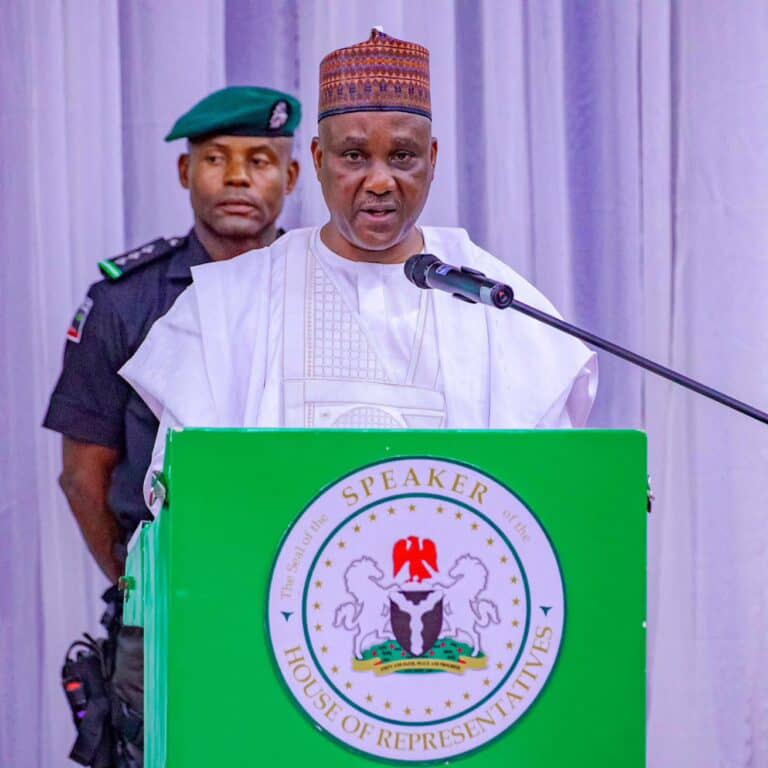
The Speaker of the House of Representatives, Dr Abbas Tajudeen says that President Bola Ahmed Tinubu, is working assiduously to address Nigeria’s public debt through a non-oil revenue drive.
This is even as the Speaker noted that public debt, if well utilised, can engender growth and development in any country.
He said Nigeria could leverage responsible borrowing for sustainable development as demonstrated by the Tinubu administration.
The Speaker who was represented by the Leader of the House, Prof. Julius Ihonvbere stated this in Abuja while delivering his keynote address at the opening of the 11th Annual Conference and General Assembly of the West Africa Association of Public Accounts Committees, WAAPAC organized by the house of representatives Public Accounts Committee with the support of WAAPAC and international development partners, with the theme ‘Strengthening Parliamentary Oversight of Public Debt: The Role of Finance and Public Accounts Committees.’
A statement by his Special Adviser on Media and Publicity, Musa Abdullahi, noted that the Speaker’s remarks were not a call to reject borrowing outright but reflected a responsible approach to debt management that ensures that borrowing translates into real value for Nigerians.
This, the statement noted, aligns squarely with President Bola Ahmed Tinubu’s Renewed Hope Agenda, which prioritises fiscal discipline, prudent resource management, and channeling funds into critical areas like infrastructure, education, green energy, and social welfare.
Last week, President Tinubu announced during a meeting with stakeholders of The Buhari Organization that Nigeria, had met its revenue target for 2025 ahead of schedule and would no longer rely on borrowing to fund its budget.
The President also said his administration’s non-oil revenue drive had yielded enough to meet this year’s projections by August, reducing Nigeria’s dependence on external loans.
At the WAAPAC event, the Speaker emphasised the “need for stronger oversight, transparent borrowing practices, and a collective resolve to ensure that tangible economic and social returns match every naira borrowed.”
He said, “By 2022, the continent’s total public debt had reached US$1.8 trillion, with external debt alone expected to surpass US$1 trillion by 2023. Several countries are now in dangerous debt-to-GDP territory: Sudan at 344 percent, Angola at 136.8 percent, Ghana at 84 percent, Kenya at nearly 70 percent, and South Africa above 77 percent.
“In many cases, governments are spending more on servicing debt than on healthcare and other essential services, shrinking the fiscal space available for development. This continental picture makes clear that Africa faces not just a budgetary concern, but a structural crisis that demands urgent parliamentary attention and coordinated reform. The countries of the West African subregion carry the same burden.”
He added, “When we examine the sources of Africa’s external financing, it becomes clear that the weight of debt on our continent is shaped by whom we borrow from and on what terms. Today, Western private lenders hold about 35 percent of Africa’s government debt through banks, asset managers, and oil traders.
“Multilateral institutions, such as the World Bank and the IMF, account for another 39 percent, while bilateral loans from other governments comprise 13 percent. Chinese creditors, despite much of the public debate, hold only 12 percent”.
“To place this in sharper focus, in 2019, bondholders alone represented 27 percent of Africa’s external debt, making them the single largest creditor group, ahead of China at 13 percent.”
Speaker Abbas stated that if Africa is to grow stronger, the countries must not only negotiate fairer terms of borrowing but also rethink their dependence on external finance.
The Speaker stated that the conference could not have come at a more opportune time, “as our nations face mounting fiscal pressures that demand stronger legislative oversight of public debt and borrowing.”
He also noted that the theme “speaks directly to the urgency of safeguarding our financial future,” stressing that it “goes to the very heart of democratic governance and sustainable development.”
Dr Abbas said, “Therefore, oversight of public debt is a democratic duty and a moral responsibility of the legislature. Our parliaments must ensure that every borrowing decision reflects prudence, transparency, and the collective interest of our citizens.
PR Oduyemi Odumade


Post comments (0)