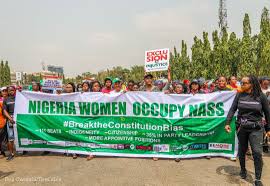
A Bill for an Act to amend the Provisions of the Constitution of the Federal Republic of Nigeria, 1999 to Allow for the participation of candidates who are not sponsored by political parties from the presidential to local Government Council Elections, last year passed first and second reading in the House of Representatives.
The bill which was sponsored by Akin Rotimi, a member representing Ikole-Oye Federal Constituency in Ekiti State was not just a true reflection and desire of many Nigerians to have an alternative political platform to actively participate in electoral process but the move is also seen as one of the political milestones recorded in the history of Nigeria’s democratic journey since 1999.
The reason is not far-fetched as in the last 25 years of the nation’s political experience, the yearnings for wider political space and participation by the majority of Nigerians is without much success.
The constriction of political participation is largely due to money politics and godfathers.
Consequently, many political parties are overwhelmed by internal party wrangling, manipulation of party primaries through candidate imposition, and apparent lack of party supremacy.
Given the obvious failure of political parties in the nation’s electoral system, it is however saddened to realise that political parties have become a private enterprise for some politicians to further shut the door of political participation against some people by increasingly hiking the price of interest and nomination forms beyond the reach of average Nigerians.
It is worthy to say that independent candidacy has been a universal principle in the democratisation process practised in most parts of the world.
It is equally a significant feature of African elections since the colonial period.
In Nigeria for instance, independent candidature is not an alien to the nation’s political process as it remained an important feature of the electoral process in 1954, 1956 and 1959 respectively, when more than 300 politicians ran as independent candidates in the various regional and the federal elections.
Interestingly, out of the number of independent candidates that ran for the 1959 federal election, nine were elected into parliament.
In fact, independent candidacy was also the third political force in the legislative election in 1956 in the western regional Assembly dominated by Action Group, AG and National Congress of Nigeria, and the Cameroon, NCNC.
While in the Western world, either by old or emerging democracies the practice of independent candidacy is a well-established electoral process.
In Britain for instance, the issue that rocked the political stage in May 2000 when Ken Livingstone, who was elbowed out as the Labour Party’s official candidate for Mayor of London, decided to run as an independent candidate against seven party candidates and won with 57.9 per cent of the vote cast should serve as a reference point for Nigeria’s quest for independent candidacy in 2027.
Judging from this, it is apparently clear that if the Independent candidacy Bill is allowed to become a law in Nigeria, it would reduce political injustices and manipulations.
It will also minimise electoral court cases, thereby giving room for patriotic Nigerians to vote and be voted for.
It is against this backdrop that it becomes pertinent for every Nigerian to queue behind this bill in ensuring that it becomes a law before 2027.
Also, the media and other relevant bodies like NOA and Civil Society Organizations CSOs are to amplify the voices of Nigerians in support of such an all-important bill of independent candidacy as a platform to emancipate the country from political parties influence.
By Godson Enejor, Edited By Grace Namiji
 play_arrow


Commentary
Democratizing Political Space Through Independent Candidacy
todayAugust 11, 2025
A Bill for an Act to amend the Provisions of the Constitution of the Federal Republic of Nigeria, 1999 to Allow for the participation of candidates who are not sponsored by political parties from the presidential to local Government Council Elections, last year passed first and second reading in the House of Representatives.
The bill which was sponsored by Akin Rotimi, a member representing Ikole-Oye Federal Constituency in Ekiti State was not just a true reflection and desire of many Nigerians to have an alternative political platform to actively participate in electoral process but the move is also seen as one of the political milestones recorded in the history of Nigeria’s democratic journey since 1999.
The reason is not far-fetched as in the last 25 years of the nation’s political experience, the yearnings for wider political space and participation by the majority of Nigerians is without much success.
The constriction of political participation is largely due to money politics and godfathers.
Consequently, many political parties are overwhelmed by internal party wrangling, manipulation of party primaries through candidate imposition, and apparent lack of party supremacy.
Given the obvious failure of political parties in the nation’s electoral system, it is however saddened to realise that political parties have become a private enterprise for some politicians to further shut the door of political participation against some people by increasingly hiking the price of interest and nomination forms beyond the reach of average Nigerians.
It is worthy to say that independent candidacy has been a universal principle in the democratisation process practised in most parts of the world.
It is equally a significant feature of African elections since the colonial period.
In Nigeria for instance, independent candidature is not an alien to the nation’s political process as it remained an important feature of the electoral process in 1954, 1956 and 1959 respectively, when more than 300 politicians ran as independent candidates in the various regional and the federal elections.
Interestingly, out of the number of independent candidates that ran for the 1959 federal election, nine were elected into parliament.
In fact, independent candidacy was also the third political force in the legislative election in 1956 in the western regional Assembly dominated by Action Group, AG and National Congress of Nigeria, and the Cameroon, NCNC.
While in the Western world, either by old or emerging democracies the practice of independent candidacy is a well-established electoral process.
In Britain for instance, the issue that rocked the political stage in May 2000 when Ken Livingstone, who was elbowed out as the Labour Party’s official candidate for Mayor of London, decided to run as an independent candidate against seven party candidates and won with 57.9 per cent of the vote cast should serve as a reference point for Nigeria’s quest for independent candidacy in 2027.
Judging from this, it is apparently clear that if the Independent candidacy Bill is allowed to become a law in Nigeria, it would reduce political injustices and manipulations.
It will also minimise electoral court cases, thereby giving room for patriotic Nigerians to vote and be voted for.
It is against this backdrop that it becomes pertinent for every Nigerian to queue behind this bill in ensuring that it becomes a law before 2027.
Also, the media and other relevant bodies like NOA and Civil Society Organizations CSOs are to amplify the voices of Nigerians in support of such an all-important bill of independent candidacy as a platform to emancipate the country from political parties influence.
By Godson Enejor, Edited By Grace Namiji
Written by: Salihu Tejumola
Democratizing Political Space Through Independent Candidacy
Similar posts
Business
APC Poised To Take Over Abia State- Deputy Speaker
todayOctober 6, 2025
Commentary
Tenant-Landlord Relationship In Nigeria: Rights And Responsibilities
todayAugust 29, 2025
Post comments (0)
Recent Video
Recent Posts