Listeners:
Top listeners:
-
 play_arrow
Kapital FM 92.9 The Station that Rocks!


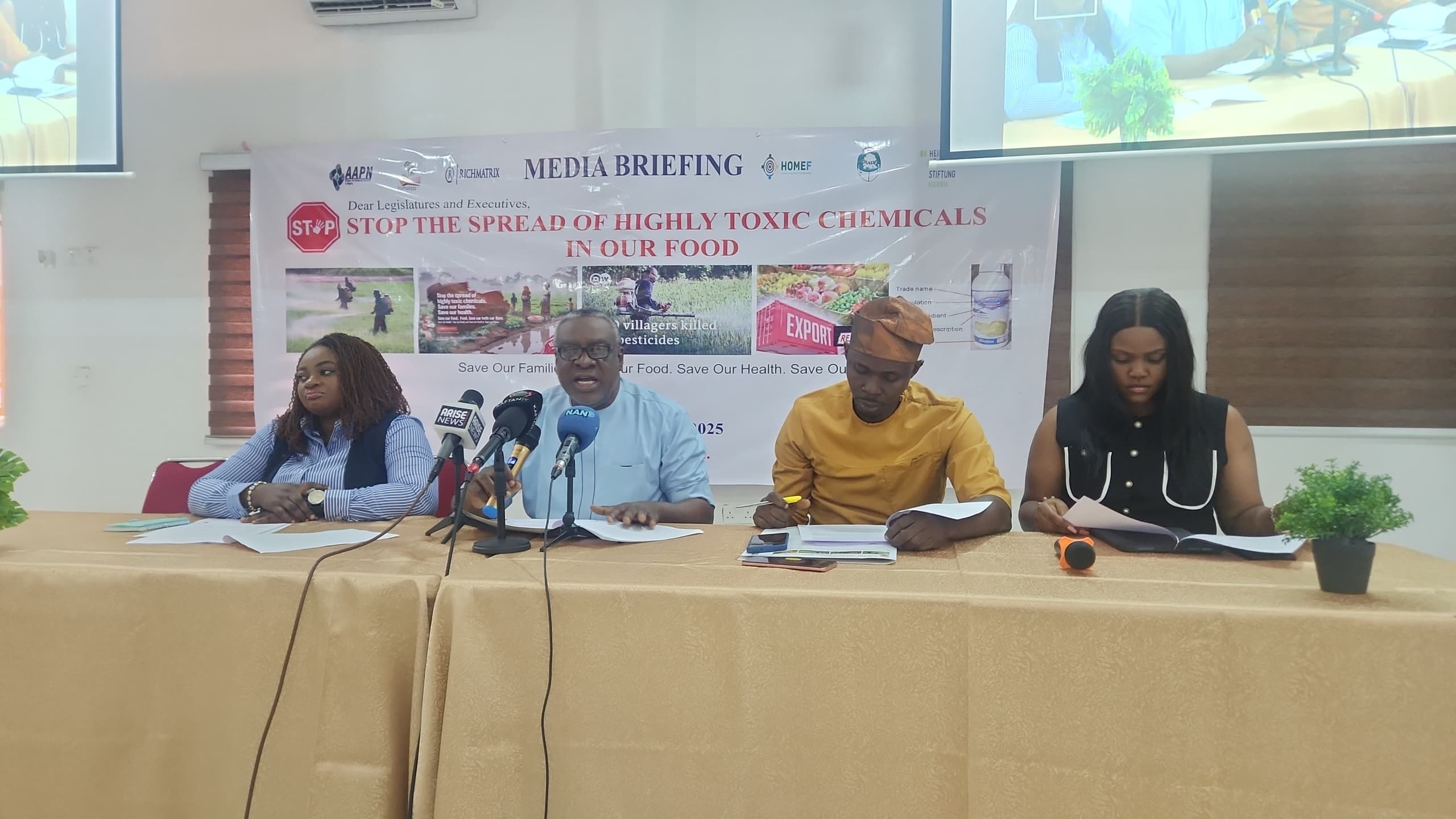
Stakeholders in the Agricultural sector have called for effective regulation of Highly Hazardous Pesticides with chronic health and environmental challenges to the citizens.
One of the stakeholders, Professor Simon Irtwange, who made this known at a news conference in Abuja, stressed that hazardous pesticides not only pose a danger to health but also the environment.
He said this had also led to the rejection of farm produce at the international market as a result of the high level of the chemicals found in the foods produced in the country.
Professor Irtwange stated that, “Nigeria loses about $362.5 million yearly due to the ban on its Beans exports to the EU because of the high pesticide residues. More than 76% of Nigerian agricultural exports are routinely rejected by the EU on safety grounds, including pesticides banned internationally but still legal in Nigeria.”

“In the past decade, rejections have also affected sesame seeds, melon seeds, dried fish, peanut chips, groundnut, palm oil, and yam.
These trade restrictions not only result in direct financial losses but also damage the country’s international reputation.”
Earlier, in a remark, the convener of the forum, Oreoluwa Adelakun of the Alliance for Action on Pesticide in Nigeria stressed the need for promoters of the Pesticides to be educated on the dangers and proper screening to ensure only safe pesticides are used in the Nigerian market.
According to her, “Accountability is achieved by making information public, requiring compliance with the law, and empowering recipients to demand quality and safety. Legislators and philanthropists must move from unchecked benevolence to responsible, transparent, and answerable support.”
She added that “this is essential for the safety, health, and dignity of Nigeria’s farming communities, and will help restore trust in public and philanthropic agricultural interventions.”
“Enact and enforce laws requiring all agricultural input distributors including legislators and philanthropists to register with regulatory agencies (e.g., NAFDAC, FISS-FMAFS).”
“Ban highly Toxic products and impose meaningful penalties including fines, suspension from office, or disqualification from further public input projects for violating safety rules, distributing illegal products, or failing to provide mandatory safety training.”
Also, an environmental Toxicologist and policy advocate Victor Fabunmi advocated for investment in organic and agroecological alternatives and desist from dependence on pesticides banned globally for health and ecological safety.
Florence Adewale, Edited By Grace Namiji


Post comments (0)