Listeners:
Top listeners:
-
 play_arrow
Kapital FM 92.9 The Station that Rocks!


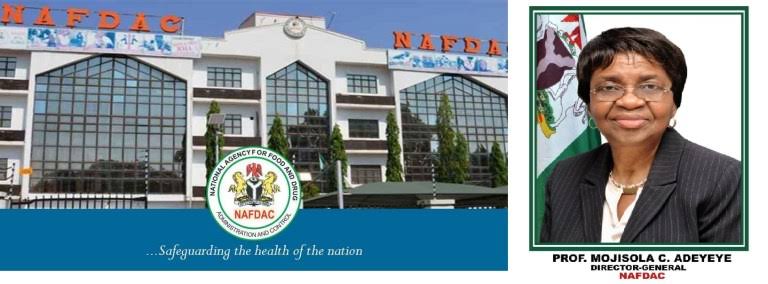
The National Agency for Food and Drug Administration and Control, NAFDAC, revealed that it generated N2.5 billion from its recent clampdown on illicit drug markets in Lagos, Onitsha, and Aba.
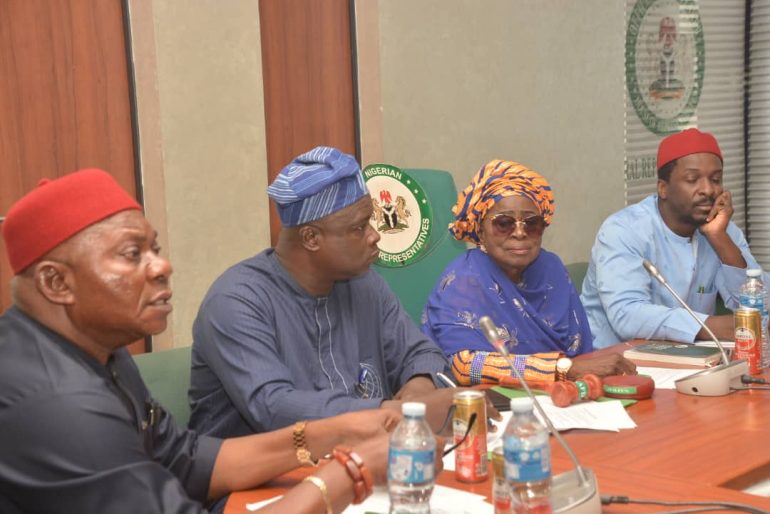
Director-General of the agency, Prof. Mojisola Adeyeye, who made the revelation during a session before the House of Representatives Committee on Food and Drug Administration and Control, said the funds were fines collected from traders found guilty of selling fake or substandard drugs during recent enforcement in open markets across the country.
According to her, all funds were paid directly into NAFDAC’s official account
she explained that N996 million was spent on enforcement operations, N159 million was borrowed from a donor grant, and N1.175 billion went to regulatory expenses noting that the agency was left with about N206 million after deductions.
She said the operation, which deployed over 1,300 security personnel, uncovered widespread violations ranging from expired and unapproved drugs to poor storage practices.
“For the operation in the three markets—Lagos, Onitsha, and Aba, about N996 million was spent. We had to borrow N159 million from an existing grant because we didn’t have funds. In addition, regulatory expenses amounted to N1.175 billion.
So, out of the N2.537 billion, we have only about N207 million is left in the account.”, she said.
Adeyeye said the enforcement drive, which lasted up to four weeks in some locations, uncovered serious threats to public health noting that some shop owners were caught distributing banned substances like Tramadol and selling expired or unregistered medicines.
“These charges were not punitive but necessary. The standard fine for violating Good Distribution and Storage Practice (GDSP) is N2 million, but in many cases, we reduced it to N500,000,” she said.
She, however lamented that the agency’s inability to sustain such critical operations is being crippled by severe revenue restrictions imposed by the federal government.
While decrying the financial constraints facing the agency, Adeyeye explained that at the end of 2023, NAFDAC had N19 billion in its accounts, but however, N9 billion was removed before the agency could access it, and only N4.5 billion was eventually released.
Speaking of the agency’s 2024 raid in Kano, she described the operation in the Northwestern state as a monumental and court-mandated intervention that differed significantly from the raids conducted in Lagos, Onitsha, and Aba.
She said the Kano raid was anchored on a judgment delivered on February 16, 2024, by the Federal High Court which ordered the relocation of open drug market traders to the newly constructed Coordinated Wholesale Centre (CWC), known as the Kanawa Pharmaceutical Centre.
“The traders initially resisted. There were real threats of violence. But we had no choice; we had to act. They padlocked their shops but we bought bigger padlocks and sealed them. To reopen, they had to agree to relocate.”
Adeyeye clarified that no administrative charges or fines were collected during the Kano enforcement, due to the urgent and court-directed nature of the operation.
The DG however noted that post-marketing surveillance was carried out after relocation.
She added: “These are the lives we are trying to save. We had no funds at the time our accounts had just been shut down and reopened with zero balance at the start of January 2024. Yet, we had to carry out the court judgment and move over 1,300 shops into the regulated centre.”
Adeyeye stated that Kano was the only state that had built its CWC as mandated by a presidential directive, long before her tenure began.
“In the South, Lagos, Onitsha, Aba, there was no CWC. So our approach was different. We had time to prepare, inspect, and charge offenders according to their violations,” she explained.
Responding to lawmakers’ concerns that Kano traders were treated more leniently compared to the operations in the southern part of the country, she said the agency followed due process, guided by the urgency of the court judgment and prevailing security risks.
“In retrospect, yes, we could have done more inspections or collected administrative fees. But that wasn’t feasible under the circumstances. Even a legal officer was almost killed at the court premises. It was a volatile situation,” she added.
Clarifying the financial situation of the agency, Director of Finance and Accounts, NAFDAC, Adeniji Nma, said the Office of the Accountant-General of the Federation (OAGF) had unilaterally classified NAFDAC as a revenue-generating agency and begun sweeping up to 50 per cent of all revenue inflows into the federal treasury.
She said: “There was an order from OAGF. They have recruited us as a revenue-generating agency. And we have been writing several letters that we are not actually a revenue-generating agency, we are just for the health of the nation.
“Part of our money is tied to our clients. When they pay for inspections or one service or the other, it is tied directly to that service. But up till now, they have not yet approved our exemption.
Chairman of the committee, Regina Akume, noted that the agency’s presentation was incomplete demanding a detailed breakdown of the revenue generated from each location where fines were collected during the enforcement operations.
“The work has not been completed. I would like to give you a chance to go back and work on this. How much were you paid into the account. What goes in and what goes out. We haven’t talked about that, she said.
The committee, consequently, directed the agency to return with a comprehensive, location-by-location account of the N2.5 billion generated from the raids.
Oduyemi Odumade, Edited By Grace Namiji

Post comments (0)