Listeners:
Top listeners:
-
 play_arrow
Kapital FM 92.9 The Station that Rocks!


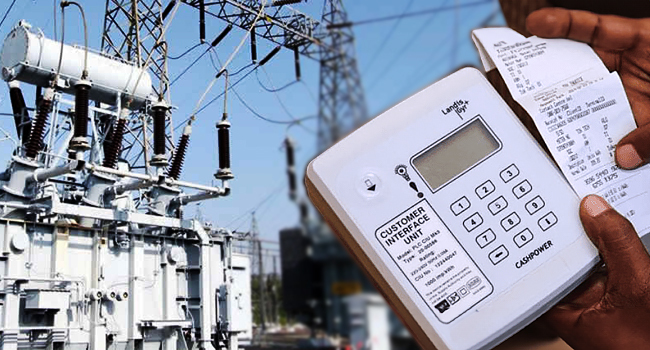
The Federal Government’s electricity tariff subsidy jumped from N610bn in 2023 to N1.94tn in 2024, According to reports, this represents a 219.67 per cent increase in yearly subsidy funding, despite the Band A tariff hike of April 2024.
The Nigerian Electricity Regulatory Commission and analysts observed that the subsidy figures rose following the floating of the naira by President Bola Tinubu in June 2024 as well as the removal of fuel subsidies, leading to high inflation rates.
According to NERC, the Federal Government incurred a total electricity tariff subsidy of N1.94tn in 2024 to cover the shortfall between the cost-reflective tariffs and the actual tariffs approved for customers. It was reported that the Federal Government paid only N371.34m out of the N1.94tn subsidy obligation for 2024; this translates to 0.019 per cent settlement.
“It is important to note that due to the absence of cost-reflective tariffs across all DisCos (distribution companies) in 2024, the government incurred a subsidy obligation of N1.94bn (62.59 per cent of total NBET invoice) during the year, which translates to an average of N161.85bn per month. This subsidy obligation of the FG is largely attributable to the FG’s policy to freeze allowed tariffs paid by customers despite the increase in cost-reflective tariffs,” the 2024 report read.
The cost was higher than the amount incurred as subsidies in 2023. The NERC annual report for 2023 stated, “The cumulative Minimum Remittance Obligation for DisCos was 52.92 per cent (N685.69bn out of N1.29tn NBET invoices), meaning that the government incurred a subsidy obligation of N610.06bn (47.08 per cent of total NBET invoices).”
In the 2024 annual report, NERC explained that the government undertook to fund the gap through tariff shortfall provisions, particularly after freezing customer tariffs at December 2022 levels. According to the report, the freeze persisted despite a sharp rise in cost-reflective tariffs driven by macroeconomic pressures, especially foreign exchange rate volatility.
It explained that the subsidy obligation surged to N633.30bn in the first quarter of 2024, marking a 303 per cent increase compared to the quarterly average of N157.15bn in 2023 and a 1,699 per cent rise from the 2022 average of N35.21bn.
Following the review of tariffs for Band A customers who accounted for about 40 per cent of the total energy consumed across all DisCos, the report showed that there was a 39.99 per cent drop in the subsidy burden between the first and second quarters. This review reduced the quarterly subsidy to N380.06bn in Q2.
However, it was learnt that the Federal Government’s directive to freeze all customer rates at July levels for the remainder of the year led to a renewed increase in subsidy obligations. NERC recorded a further N84.06bn increase in the third quarter, bringing the total for Q3 to N464.12bn. By Q4, the subsidy had risen to N471.69bn, indicating an additional N91.63bn.
The commission stated that although allowed tariffs were frozen, cost-reflective tariffs continued to rise due to prevailing macroeconomic conditions. It was stated that subsidies were applied only to the generation cost payable by distribution companies to the Nigerian Bulk Electricity Trading Plc under a remittance framework known as the DisCo Remittance Obligation, which replaced the previous Minimum Remittance Obligation framework from January 2024 and required DisCos to pay 100 per cent of their DROs.
The transition, it was said, aimed to avoid subsidy debts from distorting DisCos’ balance sheets and preventing them from raising critical infrastructure funding.
“When the tariffs allowed for DisCos to charge customers (allowed tariff) is lower than the cost-reflective tariff as computed by the Commission, the government undertakes to cover the resultant gap (between the cost-reflective and allowed tariff) in the form of tariff shortfall funding.
“The FG directive to freeze all customer tariffs at the December 2022 approved rates despite the increase in the cost-reflective tariffs arising from the major increase in FX rates caused the FGN subsidy to reach N633.30bn in 2024/Q1; this represents a 303 per cent and 1,699 per cent increase respectively compared to the average quarterly subsidy liability incurred in 2023 (N157.15bn) and 2022 (N35.21bn).
“Effective 01 April 2024, the tariffs for Band A customers who account for ~40 per cent of total energy consumed across all the DisCos were reviewed to cost-reflective rates (in most DisCos). This adjustment led to a significant decrease (-39.99 per cent) in FG subsidy obligations between 2024/Q1 (N633.30bn) and 2024/Q2 (N380.06bn).
“However, the FG directive that froze all customer rates at the July rates for the rest of 2024 led to increases in the quarterly subsidy obligation of the FGN; +N84.06bn (+22.12 per cent) in 2024/Q3 and +N91.63bn (+24.11 per cent) in 2024/Q4. This is because although allowed tariffs were frozen, the cost-reflective tariffs increased due to macroeconomic factors,” the commission explained in its 2024 report.
The total subsidy obligation for 2024, according to NERC, stood at N1.94tn, with Abuja DisCo accounting for approximately N285bn; Ikeja, N272bn; and Ibadan, N236bn. Eko DisCo attracted N231bn, followed by Benin at N169bn, and Enugu at N161bn. Other allocations included N149bn for Port Harcourt, N128bn for Kaduna, N124bn for Kano, N118bn for Jos, and N67bn for Yola DisCo.
The report added that Yola DisCo recorded the highest cost-reflective tariff at N266.64 per kilowatt hour due to factors including high operational costs, insecurity, and vandalism in its coverage area. Since its allowed tariffs remained the same as other DisCos, Yola ended up receiving nearly twice the average subsidy per unit of electricity delivered.
Conversely, Ikeja and Eko DisCos had lower cost-reflective tariffs and correspondingly lower subsidy allocations per unit delivered. At the national level, the average cost-reflective tariff was N175.31/kWh while the average allowed tariff stood at N100.27/kWh, resulting in a subsidy gap of N75.04 per kilowatt-hour.
“When you say total subsidy removal, my concern is, what is the actual price of a unit of electricity? We see it in Band A as over N200. The Power Minister recently said that Nigerians should be ready for the transition to a cost-effective tariff. That is a euphemism for an upward adjustment in tariff. So, where are we going to take it? Is it that they will now bring parity between Band A and others, or are they going to leave Band A out of it and bring the others to the level of Band A? (6:04) What exactly do they want to do? We don’t know.
“So, for me, I think the focus on the tariff is becoming apparent that the tariff is not a silver bullet. The sector needs a holistic review. I know that the Senate is currently doing a review, and they will soon go into public session.
“But a tariff increase is not going to bring a stable power sector. They did the Band A adjustment last year, and in less than 16 months, we are already crying. If you remove the subsidy by 100 per cent, a lot of people will steal more electricity,” Fadipe submitted.
Meanwhile, the President of the Dangote Group, Alhaji Aliko Dangote, has called on Nigerian investors to consider the power sector. Dangote said the country should generate up to 60,000 megawatts of electricity if the Dangote Group could generate 1,500 megawatts for its internal use.
“We as a company alone are producing, group-wide for our own consumption, over 1,500MW. So, Nigeria should not be three times what we are producing as a country. Nigeria should be at about 50,000 MW to 60,000MW,” Dangote said.
He described what had been achieved at the refinery as proof that large-scale industrial projects were possible in Nigeria, including in the power sector. “What we have done here (in building the refinery) just shows that there’s nothing impossible. All this can be replicated in our power sector. There’s no reason why Nigeria should be doing 5,000 MW,” he said.
He recalled that the sector had already been privatised and urged wealthy Nigerians to stop taking capital abroad and instead invest in the local economy.
“We have already asked the government to leave the sector. It’s supposed to be privatised. They have privatised it. We, the private sector, Nigerians, most especially us, should stop taking our money abroad and invest the money here to make sure that we develop our own country and continent…” Dangote said.

Post comments (0)