Ensuring Transparency in Allocation Of Recovered Emefiele Estate
Nigeria’s housing deficit has remained one of the most pressing developmental challenges for many decades.
With estimates placing the national housing shortfall at over 20 million units, millions of Nigerians especially civil servants, junior workers, and low-income earners have continued to struggle with inadequate shelter, overcrowded accommodations, and exorbitant rent in urban centers like Abuja, Lagos, and Port Harcourt.
Despite the multiple housing policies and interventions by successive governments, the dream of owning a home has remained out of reach for many civil servants because of high cost of construction, lack of access to mortgage financing, and corruption in the allocation of houses.
For middle-income earners, particularly those in the civil service, the cost of buying or building a home in the Federal Capital Territory is far beyond their means thereby widening the inequality gap.
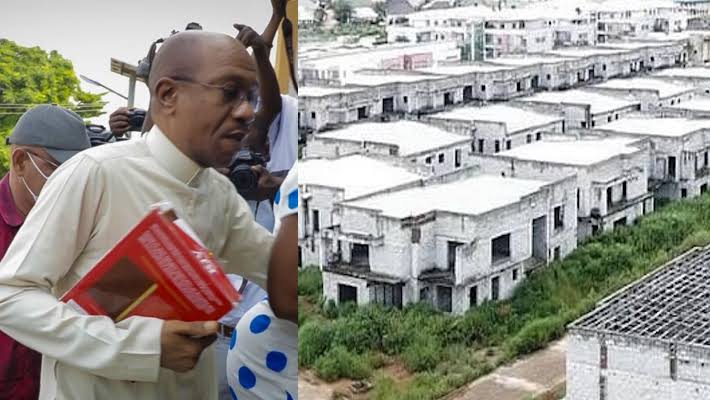
The recent recovery and proposed sale of a sprawling estate linked to the embattled former Central Bank Governor, Godwin Emefiele, is an opportunity for low income owners to own a home.
The property which was recovered by the Economic and Financial Crimes Commission (EFCC) in December 2024 following a final forfeiture order by Justice Jude Onwuegbuzie of the FCT High Court, the estate consists of 753 housing units spread over 150,000 square metres.
The Federal Government, in a promising move, has inaugurated a 12-man committee to oversee the handover and sale of the estate to Nigerians, with a focus on low- and middle- income citizens, especially civil servants.
While this is a commendable step, there is an urgent and compelling need for the committee to act transparently, efficiently, and in line with public interest to achieve the stated objective.
In retrospect, Nigerians have witnessed many government housing schemes that were derailed by corruption, nepotism, and favoritism.
Properties meant for low- income earners ended up in the hands of politically connected individuals or top- level bureaucrats.
The newly inaugurated committee has an opportunity to rebuild public confidence in government interventions by making sure that the process is credible, fair, and accountable.
Every step, from application to allocation and pricing, should be open to scrutiny and driven by integrity.
For the committee to succeed, it must first establish and publish the criteria and eligibility for interested buyers.
The process should prioritize low income earners.
Application procedures should be publicized widely using print, electronic, and digital media platforms, to reach the target population.
All allocations should be documented and published, to avoid speculation and ensure transparency.
The committee should also work with independent observers, including civil society organizations, the media and relevant anti-corruption agencies, to monitor and verify the fairness of the process.
It must resist any attempt to peg the property prices at commercial real estate market rates, which would undermine the entire initiative.
Instead, the pricing structure should reflect the financial capacity of middle-income Nigerians and offer a range of payment options.
A secure and affordable housing will not only improve their quality of life but also enhance productivity and loyalty to the service.
The recovered Emefiele estate represents more than a physical property; it symbolizes an opportunity to right past wrongs and offer hope to the underserved.
The 12-man committee must approach its task with a sense of national duty, guided by the principles of fairness, equity, and transparency.
For too long, Nigerian workers have been sidelined in the distribution of public wealth.
This initiative is a chance to reverse that trend and show that good governance can directly improve lives.
For Comments And Write-Ups Get To Us Through
[email protected]
By Nehemiah Anini, Edited By Grace Namiji
 play_arrow


Commentary
Ensuring Transparency in Allocation Of Recovered Emefiele Estate
todayJuly 12, 2025
Ensuring Transparency in Allocation Of Recovered Emefiele Estate
Nigeria’s housing deficit has remained one of the most pressing developmental challenges for many decades.
With estimates placing the national housing shortfall at over 20 million units, millions of Nigerians especially civil servants, junior workers, and low-income earners have continued to struggle with inadequate shelter, overcrowded accommodations, and exorbitant rent in urban centers like Abuja, Lagos, and Port Harcourt.
Despite the multiple housing policies and interventions by successive governments, the dream of owning a home has remained out of reach for many civil servants because of high cost of construction, lack of access to mortgage financing, and corruption in the allocation of houses.
For middle-income earners, particularly those in the civil service, the cost of buying or building a home in the Federal Capital Territory is far beyond their means thereby widening the inequality gap.
The recent recovery and proposed sale of a sprawling estate linked to the embattled former Central Bank Governor, Godwin Emefiele, is an opportunity for low income owners to own a home.
The property which was recovered by the Economic and Financial Crimes Commission (EFCC) in December 2024 following a final forfeiture order by Justice Jude Onwuegbuzie of the FCT High Court, the estate consists of 753 housing units spread over 150,000 square metres.
The Federal Government, in a promising move, has inaugurated a 12-man committee to oversee the handover and sale of the estate to Nigerians, with a focus on low- and middle- income citizens, especially civil servants.
While this is a commendable step, there is an urgent and compelling need for the committee to act transparently, efficiently, and in line with public interest to achieve the stated objective.
In retrospect, Nigerians have witnessed many government housing schemes that were derailed by corruption, nepotism, and favoritism.
Properties meant for low- income earners ended up in the hands of politically connected individuals or top- level bureaucrats.
The newly inaugurated committee has an opportunity to rebuild public confidence in government interventions by making sure that the process is credible, fair, and accountable.
Every step, from application to allocation and pricing, should be open to scrutiny and driven by integrity.
For the committee to succeed, it must first establish and publish the criteria and eligibility for interested buyers.
The process should prioritize low income earners.
Application procedures should be publicized widely using print, electronic, and digital media platforms, to reach the target population.
All allocations should be documented and published, to avoid speculation and ensure transparency.
The committee should also work with independent observers, including civil society organizations, the media and relevant anti-corruption agencies, to monitor and verify the fairness of the process.
It must resist any attempt to peg the property prices at commercial real estate market rates, which would undermine the entire initiative.
Instead, the pricing structure should reflect the financial capacity of middle-income Nigerians and offer a range of payment options.
A secure and affordable housing will not only improve their quality of life but also enhance productivity and loyalty to the service.
The recovered Emefiele estate represents more than a physical property; it symbolizes an opportunity to right past wrongs and offer hope to the underserved.
The 12-man committee must approach its task with a sense of national duty, guided by the principles of fairness, equity, and transparency.
For too long, Nigerian workers have been sidelined in the distribution of public wealth.
This initiative is a chance to reverse that trend and show that good governance can directly improve lives.
For Comments And Write-Ups Get To Us Through
[email protected]
By Nehemiah Anini, Edited By Grace Namiji
Written by: Salihu Tejumola
Ensuring Transparency in Allocation Of Recovered Emefiele Estate
Similar posts
Business
APC Poised To Take Over Abia State- Deputy Speaker
todayOctober 6, 2025
Commentary
Tenant-Landlord Relationship In Nigeria: Rights And Responsibilities
todayAugust 29, 2025
Post comments (0)
Recent Video
Recent Posts