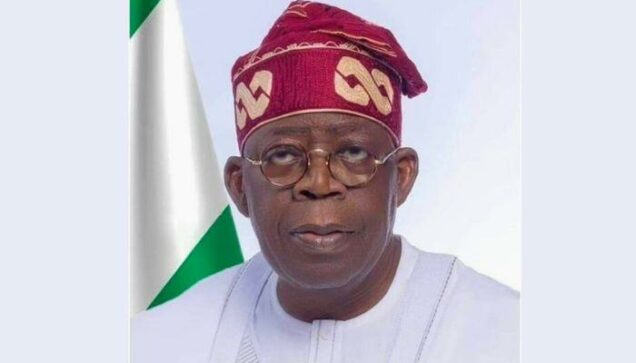
Opposition heavyweights are ramping up their strategy to present a competitive candidate as the governing party, the All Progressives Congress, on Thursday endorsed President Bola Tinubu’s candidacy for a second term in office come 2027.
According to findings by The PUNCH,the camp of former Vice President Atiku Abubakar of the Peoples Democratic Party, and Peter Obi’s Labour Party may meet again soon to iron out the grey areas.
This, sources say, will enable them to come up with an acceptable candidate as soon as possible.
The alignments follow an overwhelming endorsement by the National Working Committee of the APC, the 22 governors elected on the platform of the APC and the National Assembly leadership, who pledged to support Tinubu’s second-term ambition in 2027.
President Tinubu on Thursday said he expects more members of opposition parties to join the governing All Progressives Congress before the 2027 elections.
He dispelled accusations of engineering a one-party state, arguing that Nigeria’s constitution guarantees freedom of association and defectors are not to blame for seeking political solace.
“I am expecting more to come; that is the game. We are in a constitutional democracy that guarantees the freedom of movement and the freedom of association,” Tinubu told party members at the APC National Policy and Development Summit held at the State House Banquet Hall, Abuja, on Thursday.
His comments followed a gale of defections from the PDP to the APC in recent weeks. On May 13, 2025, three lawmakers, Senators Adamu Aliero (Kebbi Central), Yahaya Abdullahi (Kebbi North) and Garba Maidoki (Kebbi South), defected to the APC.
On April 23, 2025, Sheriff Oborevwori became the first incumbent governor of Delta State to abandon the Peoples Democratic Party since 1999. His predecessor, Ifeanyi Okowa, Deputy Governor, Monday Onyeme, commissioners, local government chairmen, and the grassroots machinery moved en bloc to the APC after a closed-door meeting in Asaba. Okowa was the PDP’s vice-presidential candidate in the 2023 election.
The PDP, Labour Party, and NNPP are currently grappling with internal crises compounded by defections to the APC, which has left their parties in disarray. Despite efforts by key PDP organs—the National Working Committee, Board of Trustees, NEC, and the Governors Forum—to resolve the crisis, these attempts have only deepened divisions, further fragmenting state and zonal structures.
Amid the growing discontent, several members have defected to the APC, trimming the PDP’s governorship map to ten states and shaking a region once regarded as a fortress for the opposition. Also, feelers from the APC identified Governors Umo Eno of Akwa Ibom, Peter Mbah of Enugu, Abba Yusuf of Kano and suspended Governor, Siminalayi Fubara of Rivers, as four new converts expected to join the party in the coming weeks.
Eno on Thursday announced plans to defect to the APC within the shortest possible time. Although news of the governor’s planned defection leaked to social media some months ago, he neither confirmed nor debunked it.
However, a government house source who confirmed the development , said that the governor broke the news during the state’s Executive Council meeting on Thursday.
The source, who pleaded anonymity, revealed that Governor Eno has directed all political appointees in the state, including commissioners, to defect with him or resign from their positions.
According to the source, it was no longer news that he had made up his mind to defect to the APC, adding that anyone who claims ignorance is still living in the 18th century. He warned his appointees that he had nothing to negotiate with them other than for them to follow him or leave the stage.
“Anybody who claims he is not aware of my intention to leave PDP is still living in 18th century. Apart from elected officials like House of Assembly members and Local Government Chairmen, I have nothing to negotiate with you.
“Let me tell you, anybody who believes when I leave PDP he will use the party structure to fight me is lying because I will still control the PDP structure.” The Governor said.
Eno disclosed that he is in love with President Tinubu’s leadership style; as such, he would want to align with him.
The Akwa Ibom state Peoples Democratic Party chairman, Aniekan Akpan, could not confirm the development at press time as his lines were busy all through, but the director of the APC media Network, Mr Iniobong John confirmed the new move to one of our correspondents.
“It is no longer a rumour. I think there are some confirmations that the governor is defecting to APC, though unofficial, but I can confirm that the governor is defecting to our party sooner or later, no official date has been confirmed yet, but all plans have been perfected for his defection to our party,” he said.
Akpan described the defection as great news for the APC, adding that the state would be connected to the national power centre.
Meanwhile, at Thursday’s summit, where the party adopted him as the sole candidate in the 2027 presidential election, President Tinubu said, “You don’t blame a people bailing out a sinking ship. I am expecting more to come; that is the game. We are in a constitutional democracy that guarantees the freedom of movement and the freedom of association. Welcome to the progressives.”
On his endorsement, he said: “The endorsement today, the carry go expression, I know the road. We will lead you on to that promised land. The resuscitation of the Nigerian economy is on course, the hope is standing before you, take it on.”
“You are the leaders and the conscience of this country. Nigeria will be industrialised. The next two years will be great. We have a mission, and we have a vision.
“To many of you I have not offered political positions, be patient, many things are coming,” he added.
The President said, “Before I speak, I just need to tell those who say a one-party system is not good. It’s one party ruling and driving the aspirations of Nigerians. Where do they stand? You don’t blame people bailing out of a sinking ship when there’s no life jacket.”
While declaring President Tinubu as the sole candidate of the APC in 2027, the national chairman of the party, Abdullahi Ganduje, affirmed the party’s commitment to securing future elections, especially the 2027 race, through fair, decisive, and strategic means.
“As the chairman of the party and on behalf of the National Working Committee, the only recognised platform, I believe, legally, to field a candidate in any election, I hereby affirm the various endorsements and declare President Bola Tinubu as the sole presidential candidate of the APC,”Ganduje told APC governors, ministers and other political heavyweights of the governing party.
“We are committed to winning fairly, decisively, and strategically. These off-season contests are not just about states; they are a reflection of our national momentum and a rehearsal for total victory in 2027,” he added.
The former Kano State Governor stated that the APC has already begun early preparations for upcoming elections and emphasised that the party will adopt a strategic and coordinated approach.
He stated, “We have started early preparations for future elections, including local government and the upcoming off-cycle polls. Our approach is strategic and coordinated.
“We are training our party agents, policy think tanks, and campaign teams to be data-driven, result-oriented, and ethically grounded. This is not business as usual; this is a political machine under transformation.”
Ganduje, noting the party’s victories in off-season elections in Kogi, Imo, Edo, and Ondo, assured that the APC will spare no effort in securing a win in the Osun Governorship election.
The APC National Chairman continued, “In the off-season elections recently held across key states, the APC demonstrated its strength, resilience, and growing national acceptance.
“Your Excellencies, during our National Caucus and National Executive Committee meetings, I have explained under the Renewed Hope mandate how the Party secured a resounding victory in Imo, Kogi, Ondo and Edo States.
“Looking ahead, we are preparing rigorously for upcoming off-cycle elections in Anambra and Osun States, and we are not leaving anything to chance. The APC is deploying early engagement strategies by strengthening state chapters, training polling unit agents and legal teams, as well as mobilising youth and women at the grassroots.”
Ganduje criticised the Peoples Democratic Party, describing it as a weakened opposition struggling for relevance in Nigeria’s political landscape.
He declared that the PDP had been reduced to a shell of its former self, plagued by internal crises and bereft of ideological direction.
“The opposition, especially the PDP, is gasping for breath. Leadership crisis, lack of ideology, and serial defections have reduced it to a shadow of its former self.
“The so-called largest party in Africa is now struggling to maintain relevance in Nigeria,” he said to party faithful.
Ganduje also aimed at the PDP’s long-standing control of the Federal Capital Territory, declaring that the ruling APC is now strategically positioned to take over the FCT in future elections.
“I would like to inform you that the FCT, for a long time, has been governed by an opposition party. We assure you, through our adept political dexterity and through our rigours, and through constructing various development bridges, we shall turn the tide in favor of our ruling party, the APC,” he stated.
The former Kano State governor used the platform to reaffirm the APC’s commitment to its founding values and development-driven agenda, saying the party remains open to partnerships but uncompromising about its core progressive principles.
“Mr President, sir, our doors remain open, but we are not compromising on dispelling all the progressive ideals on which this party was founded,” Ganduje said.
Senate President Godswill Akpabio, for his part, said that the PDP is in a state of disarray both in the South-South region and across other parts of the country.
“All other political parties are in disarray. I went to my state and saw the PDP’s umbrella—it had over 100 holes.
“Very soon, you will hear the news, though it’s not my place to announce it. But I know the National Chairman has already hinted at it—everything (political structure) in the South-South has collapsed in your favour,” Akpabio revealed.
The APC’s open declaration of Tinubu as sole candidate for the 2027 poll comes despite the Independent National Electoral Commission yet to declare open the campaign process.
Usually, candidates are chosen and declared during party conventions.
In response, the PDP National Publicity Secretary dismissed the claims of the two APC leaders as mere hallucinations, asserting that the 2027 election will prove Ganduje and Akpabio wrong.
Reacting to these remarks, the PDP’s acting National Chairman said the former Kano Governor does not have a definite ideology.
“If we (PDP) are no longer relevant, why are they poaching our members?” Damagum queried.
For his part, the PDP National Publicity Secretary, Debo Ologunagba, argued that the APC lacks the moral credibility to make such claims.
He said that while the opposition party is facing a challenging period, it has strong internal mechanisms in place to address and resolve the issues.
Ologungba, in an exclusive interview , said while the APC is losing credibility, Nigerians are increasingly rallying behind the PDP as the party’s internal crises are being resolved.
“Both of them are united in allegations that question their stewardship as public officers.
“In a sane society, Ganduje should be facing trial. The good thing about this is that time does not run against the state in criminal matters.
“At some point in the future, Ganduje will be held accountable for his stewardship,” he stated.
For Akpabio, the opposition spokesman said, “His capacity-or lack of it-can be judged by his leadership of the Senate, which has been plagued by numerous allegations, including sexual misconduct, for which he has refused to take responsibility. Additionally, there are unresolved allegations against him at the EFCC.
“So when people like this want to stay relevant, they begin to attack or discredit the opposition. But it’s on record that the 16 years of PDP leadership are still remembered as a golden era of prosperity in Nigeria.
“Those were times when macroeconomic policies allowed businesses to plan effectively. Monetary and fiscal policies were stable, and the exchange rate was steady. So, when someone like Akpabio and Ganduje speaks, it raises questions about whether their opinions are even worth considering.”
He added, “They are hallucinating. Come 2027, Nigerians will decide whether to endorse the APC’s monumental failure in governance.”
Ologunagba stated that the APC’s failure is evident across all sectors of the nation.
“Those who have numerous allegations of corruption and investigations hanging over them, like Akpabio and Ganduje, cannot be expected to offer anything meaningful. So, they should forget about writing off the PDP.
“Is the PDP facing challenges? Yes. But do we have the structures and mechanisms to overcome them? Absolutely. Slowly but surely, Nigerians are beginning to realign with the PDP,” he continued.
Meanwhile, a former Senate President and the Chairman PDP Board of Trustees, Senator Adolphus Wabara, says only the Nigerian electorate, and not a few governors, will decide the fate of President Bola Tinubu in 2027.
Wabara said: “I thank APC governors for respecting the age-long tradition of giving a first time President or governor the right of first refusal. I didn’t expect less.
“But I would like to remind them that governors do not have the mandate to decide who becomes President in 2027. Such right resides with the electorate.
“I think the APC should rather be preoccupied with how to make life better for millions of Nigerians, who have been forced into poverty due to APC’s misrule and bad economic policies.”
In the meantime, the structure of the opposition coalition has started taking shape following the revelation that former Governors Rotimi Amaechi of Rivers and his counterpart in Cross River State, Liyel Imoke, have been assigned to decide whether to float a new party or fuse into an existing platform.
Convener of the League of Northern Democrats, Dr Umar Ardo, disclosed this in a communique announcing the elitist group’s decision to join the coalition after an expanded meeting in Abuja on Thursday.
In attendance were former Kano Governor, Ibrahim Shekarau and scores of other northern political class.
The coalition is being championed by notable opposition figures such as former Vice President Atiku Abubakar and ex-Kaduna Governor Mallam Nasir El-Rufai, among others.
Addressing journalists in Abuja, Ardo explained that while Imoke headed the committee for fusing into an existing platform, Amaechi led the committee for registering a new political party.
The LND convener also revealed that the final decision on whether the coalition will join an existing political party or register a new one to push its agenda will be taken on May 30.
He said, “We resolved to support the National Opposition Coalition Group for the transitional politics towards 2027 and to contribute in the dialogue on either to register a new political party as the vehicle to drive the politics or fuse into an existing political party.
“The coalition set up two committees, among others, to consider the desirability or feasibility of registering a new political party and to consider fusing into an existing political party. Both committees submitted their reports.
“The committee for fusing into another political party is headed by former Governor Liyel Imoke and the committee for registering a new political party was chaired by erstwhile Governor Rotimi Amaechi. I was the secretary of that subcommittee for the registration of new political parties.” Continuing, Ardo noted that they are still considering platforms like the Action Democratic Party and Social Democratic Party as an option if the idea of a mega party fails.
“Former Governor Nasir El-Rufai brought a complaint that the SDP is interested in being considered for the fusion. For that, the committee set up the 30th of this month to decide either to go with ADC, SDP or form a new political party. So we in the LND here have resolved to support that position.
“We also resolved to engage the 19 northern governors on the terrible situation in the North – the endemic poverty, destitution, insecurity and unemployment facing Northern Nigeria. Most of us have agreed that the biggest problem is the inertia of our 19 northern governors.
“So we resolved that we are going to engage them one way or the other. We resolved to mobilise the North and by extension all Nigerians to pressure government, especially legislators to uphold, defend and protect the constitution of Nigeria,” he stated.
In a similar development, the Minister of Information and National Orientation, Mohammed Idris, has dismissed claims that President Tinubu is under the influence of a cabal or inner circle.
Speaking at the APC National Summit, Idris said the President makes decisions independently, guided solely by national interest. The minister’s media aide, Rabiu Ibrahim, revealed this in a statement Thursday.
“You need to study the President very well. You can have your voice; you can say what you want to say; he will listen to you but his decision is ultimately his own,” Idris told attendees at the summit themed “Renewed Hope Agenda: The Journey So Far.”
He noted that Tinubu’s leadership is marked by bold decision-making and inclusivity, which he said reflects in the policies rolled out under the administration’s Renewed Hope Agenda.
“The Renewed Hope Agenda,” the minister said, “is about positively impacting the lives of the people of Nigeria, through bold decisions designed to unleash the full scale of Nigerian potential, in a way that has never been seen or done before.”
According to Idris, the President inherited a country facing serious challenges but responded swiftly with transformative policies.
Among the President’s first major reforms were the removal of petrol and foreign exchange subsidies, steps Idris described as necessary to stop longstanding economic drain.
He said these reforms are now yielding results, with improvements seen across various sectors, including infrastructure, social investment, and resource management.
Idris highlighted several ongoing infrastructure projects, such as the Lagos-Calabar Coastal Highway and the Kano-Kaduna Standard Gauge Railway, saying they symbolise the administration’s commitment to national integration and economic expansion. He also noted the Renewed Hope Cities and Estates Projects as key interventions aimed at reducing housing shortages and boosting job creation.
On security, he reported significant gains by the armed forces, including the neutralisation and arrest of thousands of insurgents and the rescue of nearly 10,000 hostages. The acquisition of new military equipment and naval vessels, he said, has enhanced Nigeria’s security posture.
He also mentioned new federal initiatives like the creation of the Ministry of Livestock Development and the establishment of regional development commissions across all six geopolitical zones to deepen agricultural reform and regional growth.
The minister said the Renewed Hope Agenda is ultimately about impacting everyday Nigerians, improving access to education, healthcare, affordable food, and energy.



Post comments (0)