Listeners:
Top listeners:
-
 play_arrow
Kapital FM 92.9 The Station that Rocks!


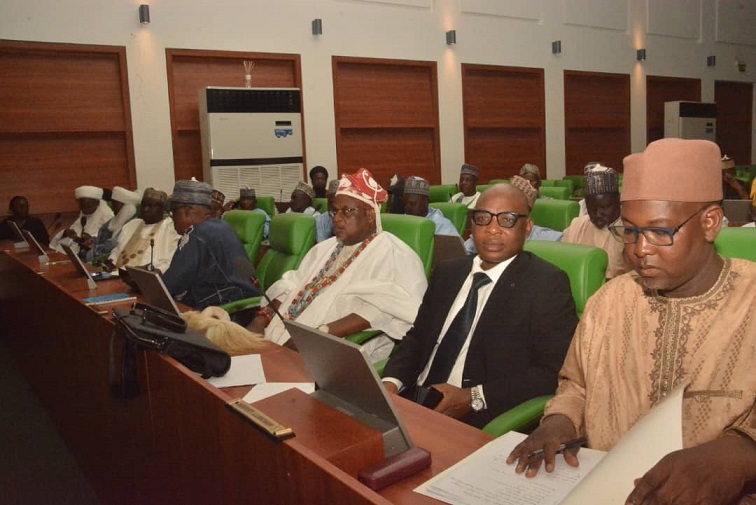

The Speaker of the House of Representatives, Abbas Tajudeen, has emphasized the importance of agriculture in achieving broad-based economic resilience, citing the country’s vulnerability to oil dependency.
Dr Abbas made the remarks while opening a public hearing on 11 bills related to agricultural research institutions.
Represented by the Deputy Chief Whip, Ibrahim Isiaka, Dr Abbas stressed the need for establishing and expanding these institutions across the country to drive agro-development and improve food security.
The speaker cited examples of countries like Brazil and Vietnam that achieved significant success in agricultural transformation through substantial investments in research and development.
He noted that Nigeria, with its expansive arable land and youthful farming population, has the potential to replicate and surpass such success stories.
Dr Abbas said that the passage of the bills will invigorate agricultural institutions, boost productivity, and improve livelihoods.
He emphasized that building institutional capacity will unlock new insights in crop production, pest control, and climate-smart agriculture.
Earlier, the committee‘s chairman, Isiaq Akinlade, said that with a population of over 220 million and still growing, the nation is desirous of more agricultural colleges and research institutions that will help propose solutions to issues such as climate change, insecurity, pest outbreaks, soil degradation, unskilled laborers, and livestock management.
“I am positive that establishing more agricultural colleges and institutions will drive specialisation and dedication to agricultural excellence”
” Another tangible benefit of the Establishment Bills is the creation of jobs for our teeming youths through their various value chains.”
“Centres of Learning – equipping students with modern, science-based agricultural skills in crop production, livestock management, agribusiness, and environmental stewardship. Hubs of innovation – researching to improve yields, enhancing farming systems to meet global standards.”
“Catalysts for Rural Development – supporting local agribusiness, and nurturing entrepreneurs who will drive sustainable development from the ground up. Bridge the gap between tradition and technology – preserving indigenous knowledge while introducing cutting-edge technologies like precision farming, biotechnology, and modern irrigation systems.”
“I envision these colleges not as isolated institutions, but as networks — collaborating with other agric institutions, ministries, and the private sector — to ensure their teachings are practical, market-relevant, and future-facing.”
“To our youths, these colleges represent opportunity. To our farmers, it represents support. And to our nation, it represents a pathway to food security, economic growth, and environmental sustainability,“ he added.
Oduyemi Odumade, Edited By Grace Namiji

Post comments (0)