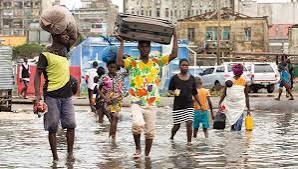
Strengthening Efforts To Prevent Flood Disasters
One of the most prevalent natural disasters in Nigeria is perennial flooding.
Flooding is an overflow of water that submerges dry land, especially from rainfall.
From reports released by the Nigerian meteorological agency, NIMET, the high flood-risk states in Nigeria are Adamawa, Akwa-lbom, Anambra, Bauchi, Bayelsa, Benue, Borno, Cross River State.
Delta, Ebonyi, Edo, Imo and Jigawa States.
Others are; Kaduna, Kano, Katsina, Kebbi, Kogi, Kwara, Lagos, Nasarawa, Niger, Ogun, Ondo, Osun, Oyo, Plateau, Rivers, Sokoto, Taraba and Yobe.
Rainfall usually occurs most significantly from the month of April and end towards October in Nigeria with only minimal rainfall experience in a few states between November to March.
Nigeria’s flooding is mainly human induced with poor urban planning practices and inadequate environmental infrastructure being contributory factors.
In 2012, Nigeria experienced its worst flooding recorded in recent times with total losses estimated at over two trillion naira in property.
The floods began in early July of that year and reportedly killed 363 people and displaced over two million.
According to the National Emergency Management Agency, NEMA, 30 of the country’s 36 states were affected by the floods, while the two most ravaged areas were Kogi and Benue states.
The floods were termed the worst in 40 years.
Also, in 2011 in Oyo state, four billion naira worth of property were destroyed, while over twenty people were confirmed dead, and bodies recovered during search and rescue operations coordinated by officials of the NEMA
In the current year, the rains are here, and some coastal towns and cities like Lagos, Asaba, and some places in Abuja have already witnessed flooding.
It should be stressed that the extent and nature of Nigeria’s flooding are such that the actual figures for displacements, losses, and fatalities can not be truly ascertained due to poor records and reporting.
One of the causes of the disaster is that many residential areas have no drainage system and rely on natural drainage channels.
In addition, some unpatriotic Nigerians build their houses on drainage channels, thereby blocking free flow of water during heavy rainfall.
Some citizens also capitalize on the loophole of ineffective development control and extend their buildings over the approved areas.
Poor waste management is another recognized factor.
Citizens’ poor attitude to waste disposal and non-provision of waste disposal services by authorities contributes to flooding.
Corruption is also a factor.
In addition, the country is currently experiencing food insecurity, and flooding has been attributed to one of the causes.
Moving forward, integration of flood risk management with structural planning is the way to go.
The Nigerian Meteorological Agency, which provides seasonal rainfall predictions and sensitization, must effectively intensify its communication on early warning flood risk areas.
This can be achieved through collaborating with the National Orientation Agency and the media.
Furthermore, there should be strong legal implications for those who commit environmental offences such as throwing refuse in the drains or building houses on water channels and canals.
The government should also periodically dredge rivers and canals to accommodate heavy inflows of water during the rainy season.
Residents should be the eyes and ears of government and promptly report any environmental infractions to the authorities.
Indeed, addressing Nigeria’s perennial flooding must be the duty of everyone. Therefore, residents must not allow the unpatriotic act of the few to jeopardize their lives and safety.
By Jeffrey Ahonmisi
 play_arrow


Commentary
Strengthening Efforts To Prevent Flood Disasters
todayMarch 17, 2025
Strengthening Efforts To Prevent Flood Disasters
One of the most prevalent natural disasters in Nigeria is perennial flooding.
Flooding is an overflow of water that submerges dry land, especially from rainfall.
From reports released by the Nigerian meteorological agency, NIMET, the high flood-risk states in Nigeria are Adamawa, Akwa-lbom, Anambra, Bauchi, Bayelsa, Benue, Borno, Cross River State.
Delta, Ebonyi, Edo, Imo and Jigawa States.
Others are; Kaduna, Kano, Katsina, Kebbi, Kogi, Kwara, Lagos, Nasarawa, Niger, Ogun, Ondo, Osun, Oyo, Plateau, Rivers, Sokoto, Taraba and Yobe.
Rainfall usually occurs most significantly from the month of April and end towards October in Nigeria with only minimal rainfall experience in a few states between November to March.
Nigeria’s flooding is mainly human induced with poor urban planning practices and inadequate environmental infrastructure being contributory factors.
In 2012, Nigeria experienced its worst flooding recorded in recent times with total losses estimated at over two trillion naira in property.
The floods began in early July of that year and reportedly killed 363 people and displaced over two million.
According to the National Emergency Management Agency, NEMA, 30 of the country’s 36 states were affected by the floods, while the two most ravaged areas were Kogi and Benue states.
The floods were termed the worst in 40 years.
Also, in 2011 in Oyo state, four billion naira worth of property were destroyed, while over twenty people were confirmed dead, and bodies recovered during search and rescue operations coordinated by officials of the NEMA
In the current year, the rains are here, and some coastal towns and cities like Lagos, Asaba, and some places in Abuja have already witnessed flooding.
It should be stressed that the extent and nature of Nigeria’s flooding are such that the actual figures for displacements, losses, and fatalities can not be truly ascertained due to poor records and reporting.
One of the causes of the disaster is that many residential areas have no drainage system and rely on natural drainage channels.
In addition, some unpatriotic Nigerians build their houses on drainage channels, thereby blocking free flow of water during heavy rainfall.
Some citizens also capitalize on the loophole of ineffective development control and extend their buildings over the approved areas.
Poor waste management is another recognized factor.
Citizens’ poor attitude to waste disposal and non-provision of waste disposal services by authorities contributes to flooding.
Corruption is also a factor.
In addition, the country is currently experiencing food insecurity, and flooding has been attributed to one of the causes.
Moving forward, integration of flood risk management with structural planning is the way to go.
The Nigerian Meteorological Agency, which provides seasonal rainfall predictions and sensitization, must effectively intensify its communication on early warning flood risk areas.
This can be achieved through collaborating with the National Orientation Agency and the media.
Furthermore, there should be strong legal implications for those who commit environmental offences such as throwing refuse in the drains or building houses on water channels and canals.
The government should also periodically dredge rivers and canals to accommodate heavy inflows of water during the rainy season.
Residents should be the eyes and ears of government and promptly report any environmental infractions to the authorities.
Indeed, addressing Nigeria’s perennial flooding must be the duty of everyone. Therefore, residents must not allow the unpatriotic act of the few to jeopardize their lives and safety.
By Jeffrey Ahonmisi
Written by: Salihu Tejumola
Strengthening Efforts To Prevent Flood Disasters
Similar posts
Business
APC Poised To Take Over Abia State- Deputy Speaker
todayOctober 6, 2025
Commentary
Tenant-Landlord Relationship In Nigeria: Rights And Responsibilities
todayAugust 29, 2025
Post comments (0)
Recent Video
Recent Posts