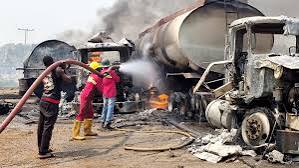
The Need For Nigerians To Stay Away From Scene Of Tanker Accidents
Tanker explosions have become a common tragedy in Nigeria, claiming lives, destroying properties, and leaving communities devastated.
Last year, many tanker accidents led to the deaths of hundreds of citizens and the destruction of properties worth millions of naira.
The tanker explosion in Dikko junction, Niger State claimed over eighty lives.
The same tragic incident occurred in Enugu and Jigawa states with different degrees of fatalities.
According to the Federal Road Safety Corps, petrol scooping jacked up fatalities to over five thousand in 2024 alone.
Apart from the loss of lives, tanker explosion has led to economic losses.
Shops, homes, and vehicles within the vicinity are destroyed, leaving victims without a source of livelihood.
The environmental damage caused by the spills also led to pollution, thereby endangering the ecosystem.
One of the most troubling aspects of tanker explosions is, the tendency of citizens to locate the accident scenes, gather at such scenes out of curiosity, either to provide assistance or to scoop fuel.
Nigerians must know that tankers involved in accidents are highly volatile, especially when carrying flammable substances.
A small spark or heat from the accident scene can ignite the fuel and cause massive explosion.
Spilled fuel can cause respiratory problems, nausea, and dizziness.
Prolonged exposure can also lead to severe health complications, even if there is no explosion.
Also, large crowds at accident scenes disrupt the work of emergency responders, such as firefighters, medical personnel, and the police.
These professionals need space and time to contain the situation and evacuate accident victims, Nigerians must know that the practice of scooping fuel from spilled tankers, is both illegal and deadly, Citizens must understand the risks, and refrain from this dangerous activity,
In addition to the risk of explosions, crowds at accident scenes can lead to secondary accidents as passing vehicles may lose control or collide with the gathered crowd.
Regulatory agencies must enforce strict maintenance standards for all vehicles, especially those transporting hazardous materials.
Reckless driving, over- speeding, and fatigue, are common causes of tanker accidents, coupled with the fact that, Nigeria’s highways are in poor condition, with potholes, narrow lanes, and lack of proper signage.
Other factors that cause tanker accidents are over speeding and carelessness, as many tanker accidents occur because the drivers parked in unsafe locations or drove for long hours without rest.
Also transporting fuel during peak traffic hours increases the risk of accidents too.
Therefore, routine inspections should be mandatory, and tankers that fail to meet safety standards should not be allowed to travel.
Tanker drivers must also undergo specialized training to handle the challenges of transporting flammable substances.
They should be certified and be evaluated regularly to ensure competence.
The Authorities should regulate the timing of tanker movements, ensuring they occur during periods of low traffic to minimize risks.
The setting up of a committee by the Federal Government to investigate the Niger state tanker explosion, is a step in the right direction.
There is the compelling need for regulatory bodies such as, the Federal Road Safety Corps FRSC, Nigerian National Petroleum Corporation NNPC, and Standards Organization of Nigeria SON to enforce safety regulations, conduct inspections, and ensure compliance with maintenance standards.
Traditional and religious leaders can play a vital role in educating their communities about the dangers of tanker accidents and the importance of staying away from accident scenes.
Citizens must take responsibility for their safety by adhering to warnings and staying away from tanker accident scenes.
To forestall the ugly incidences of loss of lives and property, there is the compelling need for a strict enforcement of safety regulations, public awareness campaigns, and improved road infrastructure, with the collaboration of various stakeholders to reduce the occurrence and impact of tanker explosions in Nigeria.
Nehemiah Anini, Edited By Grace Namiji
 play_arrow


Commentary
The Need For Nigerians To Stay Away From Scene Of Tanker Accidents
todayFebruary 4, 2025
The Need For Nigerians To Stay Away From Scene Of Tanker Accidents
Tanker explosions have become a common tragedy in Nigeria, claiming lives, destroying properties, and leaving communities devastated.
Last year, many tanker accidents led to the deaths of hundreds of citizens and the destruction of properties worth millions of naira.
The tanker explosion in Dikko junction, Niger State claimed over eighty lives.
The same tragic incident occurred in Enugu and Jigawa states with different degrees of fatalities.
According to the Federal Road Safety Corps, petrol scooping jacked up fatalities to over five thousand in 2024 alone.
Apart from the loss of lives, tanker explosion has led to economic losses.
Shops, homes, and vehicles within the vicinity are destroyed, leaving victims without a source of livelihood.
The environmental damage caused by the spills also led to pollution, thereby endangering the ecosystem.
One of the most troubling aspects of tanker explosions is, the tendency of citizens to locate the accident scenes, gather at such scenes out of curiosity, either to provide assistance or to scoop fuel.
Nigerians must know that tankers involved in accidents are highly volatile, especially when carrying flammable substances.
A small spark or heat from the accident scene can ignite the fuel and cause massive explosion.
Spilled fuel can cause respiratory problems, nausea, and dizziness.
Prolonged exposure can also lead to severe health complications, even if there is no explosion.
Also, large crowds at accident scenes disrupt the work of emergency responders, such as firefighters, medical personnel, and the police.
These professionals need space and time to contain the situation and evacuate accident victims, Nigerians must know that the practice of scooping fuel from spilled tankers, is both illegal and deadly, Citizens must understand the risks, and refrain from this dangerous activity,
In addition to the risk of explosions, crowds at accident scenes can lead to secondary accidents as passing vehicles may lose control or collide with the gathered crowd.
Regulatory agencies must enforce strict maintenance standards for all vehicles, especially those transporting hazardous materials.
Reckless driving, over- speeding, and fatigue, are common causes of tanker accidents, coupled with the fact that, Nigeria’s highways are in poor condition, with potholes, narrow lanes, and lack of proper signage.
Other factors that cause tanker accidents are over speeding and carelessness, as many tanker accidents occur because the drivers parked in unsafe locations or drove for long hours without rest.
Also transporting fuel during peak traffic hours increases the risk of accidents too.
Therefore, routine inspections should be mandatory, and tankers that fail to meet safety standards should not be allowed to travel.
Tanker drivers must also undergo specialized training to handle the challenges of transporting flammable substances.
They should be certified and be evaluated regularly to ensure competence.
The Authorities should regulate the timing of tanker movements, ensuring they occur during periods of low traffic to minimize risks.
The setting up of a committee by the Federal Government to investigate the Niger state tanker explosion, is a step in the right direction.
There is the compelling need for regulatory bodies such as, the Federal Road Safety Corps FRSC, Nigerian National Petroleum Corporation NNPC, and Standards Organization of Nigeria SON to enforce safety regulations, conduct inspections, and ensure compliance with maintenance standards.
Traditional and religious leaders can play a vital role in educating their communities about the dangers of tanker accidents and the importance of staying away from accident scenes.
Citizens must take responsibility for their safety by adhering to warnings and staying away from tanker accident scenes.
To forestall the ugly incidences of loss of lives and property, there is the compelling need for a strict enforcement of safety regulations, public awareness campaigns, and improved road infrastructure, with the collaboration of various stakeholders to reduce the occurrence and impact of tanker explosions in Nigeria.
Nehemiah Anini, Edited By Grace Namiji
Written by: Salihu Tejumola
The Need For Nigerians To Stay Away From Scene Of Tanker Accidents
Similar posts
Business
APC Poised To Take Over Abia State- Deputy Speaker
todayOctober 6, 2025
Commentary
Tenant-Landlord Relationship In Nigeria: Rights And Responsibilities
todayAugust 29, 2025
Post comments (0)
Recent Video
Recent Posts