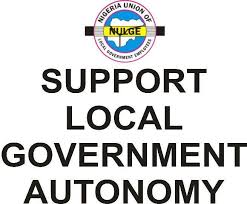
Granting Autonomy To Local Governments
In recent times, Nigeria’s Local Government System, which is the ‘Third Tier of Government’ has been wallowing in anguish owing to the neglect.
Without doubt, many governors in the country have turned the administrators of local governments into aides answerable to them.
Recently, the Senate, after a rigorous deliberation, resolved to grant full financial and administrative autonomy to the 774 local governments across the country by amending Section 124 of Nigeria’s 1999 Constitution, as amended.
The section provides a consequential provision for making the local governments a full Third Tier of Government without undue interference from the state governments.
It is noteworthy that the amendment was one of the 22 others previously approved by the House of Representatives.
The section, therefore, deleted the State Independent Electoral Commission from the Constitution, thereby vesting the powers to conduct local government elections on the Independent National Electoral Commission, INEC.
The newly amended document, which would be transmitted to State Houses of Assembly for concurrence, also approved the creation of the Office of Auditor General for Local Governments as well as the State Local Government Service Commission.
The Local Government system, which was established for the sole intent of decentralizing political power and delegation of authority, is a platform towards maintaining law and encouraging the cooperation and participation of people at the grassroots.
The Local Government structure comprises the Chairman and the Councillors, who are drawn from each political ward in a given local government area.
The councillors who constitute the local Legislative Council of that area, is liable to make laws and reach resolutions for the running of the local government.
By the establishment of the local government system, the people are expected to have a direct access to the government through their respective councillors.
The councillors are required to listen to the yearnings of their constituents, and convey such demands to the local government chairman for action.
With the aid of this platform, the people find it very easy to freely relate to the government.
Regrettably, the various local government administrations across the country have not fared Well as in most cases, a sitting governor would withhold the allocations meant for the day-to-day running of local governments.
Since the third tier of government lacks financial autonomy, the administrators are often denied their lawful entitlements.
This approach, which has succeeded in abusing the system, has over the years made the platform seem moribund.
The most disturbing aspect is a situation where the governor would prefer to set up a transition and caretaker committees for the local government rather than conducting an election that would produce elected officers.
For the local government system to be viable as it was in the past, there must be urgent review of laws regarding the third tier of government.
Consequently, to ensure credibility and prudence in the management of the allocated funds, the various anti-corruption agencies in the country must extend their tentacles to the Local Government level.
Again, the local government chairmen and councillors must always stay in their domains to administer the localgovernments.
Now that the National Assembly has done the needful, the State Houses of Assembly should also give a nod to the amended section of the Constitution to grant local governments full autonomy.
By Fred Nwaozor, Edited By Grace Namiji
 play_arrow


Commentary
Granting Autonomy To Local Governments
todayMay 18, 2024
Granting Autonomy To Local Governments
In recent times, Nigeria’s Local Government System, which is the ‘Third Tier of Government’ has been wallowing in anguish owing to the neglect.
Without doubt, many governors in the country have turned the administrators of local governments into aides answerable to them.
Recently, the Senate, after a rigorous deliberation, resolved to grant full financial and administrative autonomy to the 774 local governments across the country by amending Section 124 of Nigeria’s 1999 Constitution, as amended.
The section provides a consequential provision for making the local governments a full Third Tier of Government without undue interference from the state governments.
It is noteworthy that the amendment was one of the 22 others previously approved by the House of Representatives.
The section, therefore, deleted the State Independent Electoral Commission from the Constitution, thereby vesting the powers to conduct local government elections on the Independent National Electoral Commission, INEC.
The newly amended document, which would be transmitted to State Houses of Assembly for concurrence, also approved the creation of the Office of Auditor General for Local Governments as well as the State Local Government Service Commission.
The Local Government system, which was established for the sole intent of decentralizing political power and delegation of authority, is a platform towards maintaining law and encouraging the cooperation and participation of people at the grassroots.
The Local Government structure comprises the Chairman and the Councillors, who are drawn from each political ward in a given local government area.
The councillors who constitute the local Legislative Council of that area, is liable to make laws and reach resolutions for the running of the local government.
By the establishment of the local government system, the people are expected to have a direct access to the government through their respective councillors.
The councillors are required to listen to the yearnings of their constituents, and convey such demands to the local government chairman for action.
With the aid of this platform, the people find it very easy to freely relate to the government.
Regrettably, the various local government administrations across the country have not fared Well as in most cases, a sitting governor would withhold the allocations meant for the day-to-day running of local governments.
Since the third tier of government lacks financial autonomy, the administrators are often denied their lawful entitlements.
This approach, which has succeeded in abusing the system, has over the years made the platform seem moribund.
The most disturbing aspect is a situation where the governor would prefer to set up a transition and caretaker committees for the local government rather than conducting an election that would produce elected officers.
For the local government system to be viable as it was in the past, there must be urgent review of laws regarding the third tier of government.
Consequently, to ensure credibility and prudence in the management of the allocated funds, the various anti-corruption agencies in the country must extend their tentacles to the Local Government level.
Again, the local government chairmen and councillors must always stay in their domains to administer the localgovernments.
Now that the National Assembly has done the needful, the State Houses of Assembly should also give a nod to the amended section of the Constitution to grant local governments full autonomy.
By Fred Nwaozor, Edited By Grace Namiji
Written by: Salihu Tejumola
Granting Autonomy To Local Governments
Similar posts
Business
APC Poised To Take Over Abia State- Deputy Speaker
todayOctober 6, 2025
Commentary
Tenant-Landlord Relationship In Nigeria: Rights And Responsibilities
todayAugust 29, 2025
Post comments (0)
Recent Video
Recent Posts