Listeners:
Top listeners:
-
 play_arrow
Kapital FM 92.9 The Station that Rocks!


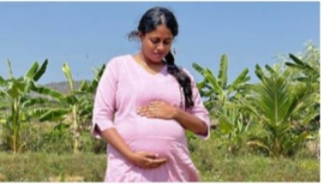
Working in extreme heat can double the risk of stillbirth and miscarriage for pregnant women, according to new research from India.
The study found that the risks to mothers-to-be are significantly higher than previously thought.
Researchers say hotter summers can affect not only women in tropical climates, but also in countries such as the UK. Look
They want specific health advice for working pregnant women globally.
Eight hundred pregnant women in the southern Indian state of Tamil Nadu took part in the study, which was started in 2017 by the Faculty of Public Health at the Sri Ramachandra Institute of Higher Education and Research (SRIHER) in Chennai.
About half of those who took part worked in jobs where they were exposed to high levels of heat, such as agriculture, brick kilns and salt flats. The others worked in cooler environments, such as schools and hospitals, although some workers were also exposed to very high levels of heat in those jobs too.

There is no universal threshold for what level of heat is considered to be too hot for the human body.
“[The impact of heat] is relative to what you’re used to and what your body’s used to,” says Prof Jane Hirst, one of the scientists who contributed to the study.
The pregnant women in the study in India really are “at the forefront of experiencing climate change,” says Prof Hirst, who is a UK-based consultant obstetrician, and Professor of Global Women’s Health at medical research organisation The George Institute.
Earth’s average temperature is projected to rise by nearly three degrees by the end of the century, compared with pre-industrial times, and the World Health Organization (WHO) is warning of “an existential threat to all of us” with pregnant women facing “some of the gravest consequences”.
Previous studies have shown about a 15% rise in the risk of premature birth and stillbirth during heatwaves, but these have generally been conducted in high-income countries such as the US and Australia.
The latest findings from India are particularly stark and worrying, says Prof Hirst, and have wider implications.
BBC


Post comments (0)