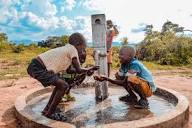
Ecological Effects Of Boreholes
The practice of drilling boreholes for usage has existed before the eighties but became prominent in Nigeria in the 1980s through government and international support agencies.
With two thirds of the earth’s surface covered by water and the human body consisting of 75 percent of it, it is evidently clear that water is one of the prime elements responsible for life on earth.
Apart from drinking for survival, people have many other uses for water such as cooking, washing, cleaning, recreation.
Water is also essential for the healthy growth of farm crops and farm stock and also used for manufacturing of different products.
In this light therefore, it is most important that the water which people drink and use for other purposes is clean.
This means that the water must be free from germs and chemicals, safe enough for humans and other forms of life.
Access to safe drinking water has improved over the last decades in almost every part of the world, but approximately one billion people still lack access to safe water and this has led to search for possible good water, like drilling of boreholes.
In recent time, majority of Nigerians have attributed the craze for drilling boreholes to the failure of government to provide safe and clean water.
Scientists have however pointed out that rampant and indiscriminate digging of the ground for water weakens the soil surface with an enhanced porosity as its ultimate result.
Drilling of Boreholes could lead to landmines, earthquakes or tremor in the foreseeable future.
It is also easily contaminated by leaky contaminants, heavy metals and microorganisms.
Boreholes have serious environmental effects on ground water with a high tendency of land subsidence like collapse which may affect structures and infrastructure.
Turning every household to a mini water works with boreholes in almost every residence could precipitate environmental disasters.
Some of the boreholes are exposed to underground pathogens and pollutants, especially E-coli, which is responsible for stomach upset that includes diarrhea and massive loss of fluids.
Therefore only those with very strong immunity and body system can adequately overcome the negative health issues which drinking of untreated water poses.
Treatment of water from boreholes is the best bet, if it is to be beneficial to the body system but sadly, Nigerians are not known to purify water from boreholes before drinking.
Many do not even know that there is a particular level that must be drilled to get the best source of water.
In view of the ecological disasters facing humanity due to indiscriminate construction of boreholes, government should re-assess the issue of water supply.
Authorities should therefore also put in place alternatives for water procurement for people who have been forced to build boreholes only as a last resort.
The drilling of boreholes, if necessary, should be checked and regulated by the Government.
To this end, only professional drilling companies and consultants should be allowed to drill water wells under the supervision of agencies like the ministry of Environment and other competent organizations.
Government should also demand for borehole construction of an area in a standard format and submit to the relevant Government authority.
Updated records and information should be made freely available and used in preparing subsequent drilling specifications.
There is the compelling need for drastic measures to be taken towards making water boards across the nation functional.
The government and private sectors can also help boost the availability of potable and adequate water supply in the country if they invest in the water sector as in oil and gas, energy, and housing.
By Nehemiah Anini, Edited By Grace Namiji
 play_arrow


Commentary
Ecological Effects Of Boreholes
todayJanuary 30, 2024
Ecological Effects Of Boreholes
The practice of drilling boreholes for usage has existed before the eighties but became prominent in Nigeria in the 1980s through government and international support agencies.
With two thirds of the earth’s surface covered by water and the human body consisting of 75 percent of it, it is evidently clear that water is one of the prime elements responsible for life on earth.
Apart from drinking for survival, people have many other uses for water such as cooking, washing, cleaning, recreation.
Water is also essential for the healthy growth of farm crops and farm stock and also used for manufacturing of different products.
In this light therefore, it is most important that the water which people drink and use for other purposes is clean.
This means that the water must be free from germs and chemicals, safe enough for humans and other forms of life.
Access to safe drinking water has improved over the last decades in almost every part of the world, but approximately one billion people still lack access to safe water and this has led to search for possible good water, like drilling of boreholes.
In recent time, majority of Nigerians have attributed the craze for drilling boreholes to the failure of government to provide safe and clean water.
Scientists have however pointed out that rampant and indiscriminate digging of the ground for water weakens the soil surface with an enhanced porosity as its ultimate result.
Drilling of Boreholes could lead to landmines, earthquakes or tremor in the foreseeable future.
It is also easily contaminated by leaky contaminants, heavy metals and microorganisms.
Boreholes have serious environmental effects on ground water with a high tendency of land subsidence like collapse which may affect structures and infrastructure.
Turning every household to a mini water works with boreholes in almost every residence could precipitate environmental disasters.
Some of the boreholes are exposed to underground pathogens and pollutants, especially E-coli, which is responsible for stomach upset that includes diarrhea and massive loss of fluids.
Therefore only those with very strong immunity and body system can adequately overcome the negative health issues which drinking of untreated water poses.
Treatment of water from boreholes is the best bet, if it is to be beneficial to the body system but sadly, Nigerians are not known to purify water from boreholes before drinking.
Many do not even know that there is a particular level that must be drilled to get the best source of water.
In view of the ecological disasters facing humanity due to indiscriminate construction of boreholes, government should re-assess the issue of water supply.
Authorities should therefore also put in place alternatives for water procurement for people who have been forced to build boreholes only as a last resort.
The drilling of boreholes, if necessary, should be checked and regulated by the Government.
To this end, only professional drilling companies and consultants should be allowed to drill water wells under the supervision of agencies like the ministry of Environment and other competent organizations.
Government should also demand for borehole construction of an area in a standard format and submit to the relevant Government authority.
Updated records and information should be made freely available and used in preparing subsequent drilling specifications.
There is the compelling need for drastic measures to be taken towards making water boards across the nation functional.
The government and private sectors can also help boost the availability of potable and adequate water supply in the country if they invest in the water sector as in oil and gas, energy, and housing.
By Nehemiah Anini, Edited By Grace Namiji
Written by: Salihu Tejumola
Ecological Effects Of Boreholes
Similar posts
Business
APC Poised To Take Over Abia State- Deputy Speaker
todayOctober 6, 2025
Commentary
Tenant-Landlord Relationship In Nigeria: Rights And Responsibilities
todayAugust 29, 2025
Post comments (0)
Recent Video
Recent Posts