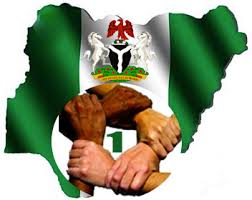
Promoting Ideals Of National Unity In The New Year
By Nehemiah Annini
Prior to the attainment of independence in 1960, tribalism did not assume the elevated proportion in the country today.
Nigerians then co-existed in unity and every Nigerian was identified as a Nigerian first, and not from his tribal or religious background.
The struggle for independence was done in unity and the eventual attainment of it was not credited to any particular tribe or region.
Nigerians were free to reside, work and participate in politics anywhere.
However, after independence, tribalism began to rear its ugly head as some politicians began to carve out territories of influence for themselves.
They whipped up tribal sentiments to garner support and used tribal platforms to further their individual interests at the detriment of national unity.
Parochialism therefore, crept into the political economy of the nation, mediocrity overtook meritocracy and competence submerged for incompetence.
A nation is a big family that its citizens should share common values.
That is why every nation including Nigeria needs effective institutions that are at the service of love and life.
Today, even when the economic hardship is affecting every Nigerian, tribalism and religion have permeated in every aspect of national life.
In Party politics, freedom of choice is attacked with violence and manipulation; credible elections are devalued while democracy is highly mutilated.
There is hardly any aspect of national life that is devoid of tribal or religious connotation and very few leaders can claim to command national complexion.
Every action taken by leaders in all strata of society is viewed and interpreted from the tribal and religious prism.
Even religion that is supposed to be non-partisan has suffered political infiltration while traditional Institutions cannot be exonerated from these ignoble elements.
When Boko Haram came up in 2009, it was easy to associate it with politics and religion while little effort was made to nip it in the bud.
This made the insurgents to consolidate and intensify their carnage.
Today, the nation is battling with insecurity ranging from herdsmen attacks, kidnapping to armed banditry and robbery.
Unfortunately, some Nigerians are still promoting tribal and religious sentiments in the socio-political and economic arena, quoting references to support their stance.
To say the least, this is most unfortunate and indicates that some Nigerians are yet to divest themselves from these biases of tribal origin, or religious inclination.
The activities of Boko Haram for instance do not discriminate among religions or tribes when the bombs explode in a market place or a motor park and the spontaneous response of Nigerians in providing succor to the victims does not also discriminate among religions and tribe.
This should send a strong signal to other Nigerians that they can co-exist in unity, if some politicians refrain from fanning the embers of disunity through religious or tribal platforms.
Tribe and religious tension is always heightened during political processes and through activities of some individuals placed in positions of authority that fail to disregard ethnic or religious considerations in their daily activities.
The politicians that speak and act in ways that negate the consciousness of the nation as a family should be reminded that every Nigerian has a right to be different if the difference is not inimical to the common good and shared ideals.
As the nation begins another journey for 2024, it behooves all citizens, irrespective of their backgrounds to promote national unity in their activities.
Non-governmental organizations should also join in this campaign.
Usually, the rural populace is the easy victim and prone to manipulations, therefore such campaign should also be intensified in the grassroots for the quest for national unity and development, to be achieved.
Edited By Grace Namiji
 play_arrow


Commentary
Promoting Ideals Of National Unity In The New Year
todayJanuary 8, 2024
Promoting Ideals Of National Unity In The New Year
By Nehemiah Annini
Prior to the attainment of independence in 1960, tribalism did not assume the elevated proportion in the country today.
Nigerians then co-existed in unity and every Nigerian was identified as a Nigerian first, and not from his tribal or religious background.
The struggle for independence was done in unity and the eventual attainment of it was not credited to any particular tribe or region.
Nigerians were free to reside, work and participate in politics anywhere.
However, after independence, tribalism began to rear its ugly head as some politicians began to carve out territories of influence for themselves.
They whipped up tribal sentiments to garner support and used tribal platforms to further their individual interests at the detriment of national unity.
Parochialism therefore, crept into the political economy of the nation, mediocrity overtook meritocracy and competence submerged for incompetence.
A nation is a big family that its citizens should share common values.
That is why every nation including Nigeria needs effective institutions that are at the service of love and life.
Today, even when the economic hardship is affecting every Nigerian, tribalism and religion have permeated in every aspect of national life.
In Party politics, freedom of choice is attacked with violence and manipulation; credible elections are devalued while democracy is highly mutilated.
There is hardly any aspect of national life that is devoid of tribal or religious connotation and very few leaders can claim to command national complexion.
Every action taken by leaders in all strata of society is viewed and interpreted from the tribal and religious prism.
Even religion that is supposed to be non-partisan has suffered political infiltration while traditional Institutions cannot be exonerated from these ignoble elements.
When Boko Haram came up in 2009, it was easy to associate it with politics and religion while little effort was made to nip it in the bud.
This made the insurgents to consolidate and intensify their carnage.
Today, the nation is battling with insecurity ranging from herdsmen attacks, kidnapping to armed banditry and robbery.
Unfortunately, some Nigerians are still promoting tribal and religious sentiments in the socio-political and economic arena, quoting references to support their stance.
To say the least, this is most unfortunate and indicates that some Nigerians are yet to divest themselves from these biases of tribal origin, or religious inclination.
The activities of Boko Haram for instance do not discriminate among religions or tribes when the bombs explode in a market place or a motor park and the spontaneous response of Nigerians in providing succor to the victims does not also discriminate among religions and tribe.
This should send a strong signal to other Nigerians that they can co-exist in unity, if some politicians refrain from fanning the embers of disunity through religious or tribal platforms.
Tribe and religious tension is always heightened during political processes and through activities of some individuals placed in positions of authority that fail to disregard ethnic or religious considerations in their daily activities.
The politicians that speak and act in ways that negate the consciousness of the nation as a family should be reminded that every Nigerian has a right to be different if the difference is not inimical to the common good and shared ideals.
As the nation begins another journey for 2024, it behooves all citizens, irrespective of their backgrounds to promote national unity in their activities.
Non-governmental organizations should also join in this campaign.
Usually, the rural populace is the easy victim and prone to manipulations, therefore such campaign should also be intensified in the grassroots for the quest for national unity and development, to be achieved.
Edited By Grace Namiji
Written by: Salihu Tejumola
Promoting Ideals Of National Unity In The New Year
Similar posts
Business
APC Poised To Take Over Abia State- Deputy Speaker
todayOctober 6, 2025
Commentary
Tenant-Landlord Relationship In Nigeria: Rights And Responsibilities
todayAugust 29, 2025
Post comments (0)
Recent Video
Recent Posts