Listeners:
Top listeners:
-
 play_arrow
Kapital FM 92.9 The Station that Rocks!


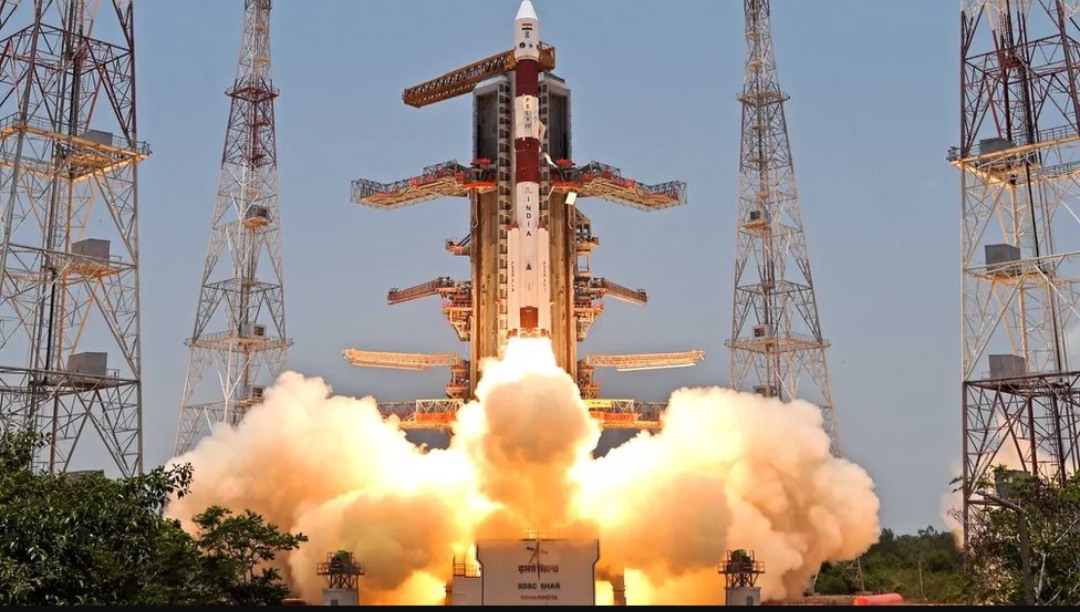
India’s first solar observation mission is set to reach its final destination in a few hours.
On Saturday, the space agency Isro will attempt to place Aditya-L1 in a spot in space from where it will be able to continuously watch the Sun.
The spacecraft has been traveling towards the Sun for four months since lift-off on 2 September.
It was launched just days after India made history by becoming the first to land near the Moon’s south pole.
India’s first space-based mission to study the solar system’s biggest object is named after Surya – the Hindu god of the Sun, who is also known as Aditya. And L1 stands for Lagrange point 1 – the exact place between the Sun and Earth where the spacecraft is heading.
According to the European Space Agency, a Lagrange point is a spot where the gravitational forces of two large objects – such as the Sun and the Earth – cancel each other out, allowing a spacecraft to “hover”.
L1 is located 1.5 million km (932,000 miles) from the Earth, which is 1% of the Earth-Sun distance. Isro recently said that the spacecraft had already covered most of the distance to its destination.
An Isro official told the BBC that “a final maneuver” will be performed on Saturday at around 16:00 India time (10:30 GMT) to place Aditya in L1’s orbit.
Isro chief S Somanath has said they will trap the craft in orbit and will occasionally need to do more maneuvers to keep it in place.
Once Aditya-L1 reaches this “parking spot” it will be able to orbit the Sun at the same rate as the Earth. From this vantage point, it will be able to watch the Sun constantly, even during eclipses and occultations, and carry out scientific studies.
The orbiter carries seven scientific instruments that will observe and study the solar corona (the outermost layer); the photosphere (the Sun’s surface or the part we see from the Earth) and the chromosphere (a thin layer of plasma that lies between the photosphere and the corona).
After the lift-off on 2 September, the spacecraft went four times around the Earth before escaping the sphere of Earth’s influence on 30 September. In early October, Isro said they had done a slight correction to its trajectory to ensure it was on its intended path toward the final destination.
The agency says some of the instruments on board have already started work, gathering data and taking images.
Just days after lift-off, Isro shared the first images sent by the mission – one showed the Earth and the Moon in one frame and the second was a “selfie” that showed two of its scientific instruments.
And last month the agency released the first-ever full-disk images of the Sun in wavelengths ranging from 200 to 400 nanometres, saying they provided “insights into the intricate details of the Sun’s photosphere and chromosphere”.
BBC


Post comments (0)